A single well-produced event can create energy in the room. The greater challenge is building an experience approach that can carry a message across leadership meetings, product launches, training programs, hybrid audiences, and future moments of engagement without losing clarity or impact.
Custom event production helps organizations meet that challenge by connecting strategy, storytelling, learning, design, technology, and execution around a consistent audience purpose. Rather than treating each event as an isolated production, organizations can create adaptable experiences that support different formats and audiences while keeping the message coherent, the interaction meaningful, and the experience memorable.
When your most important meeting, launch, summit, or training experience needs to move people, every detail matters. Strategy guides the work. Creativity shapes the story. Precision brings it to life. DEVLINHAIR Production & Learning designs and produces action-driven meetings, live events, and training experiences that move audiences. From our New York City studio, DEVLINHAIR helps organizations bring complex ideas, leadership priorities, and learning moments to life with clarity, purpose, and production precision. Ready to create a hybrid experience your audience can follow, feel, and act on? Let’s talk.
Custom Production as an Experience Strategy
Organizations often rely on meetings and events to accomplish work that cannot be reduced to a presentation deck or an email. A national sales meeting may need to align teams around priorities and build confidence for the year ahead. A product launch may need to explain a complex offering while creating excitement and credibility. A leadership summit may need to help people feel connected to a shared direction during a period of change.
Custom event production supports these objectives by starting with the audience and the message rather than with the venue or technology alone. The agenda, environment, visuals, speakers, media, interaction, technical approach, and follow-up resources should all help participants understand why the experience matters and what they should carry forward afterward.
This becomes especially important when organizations plan a series of related experiences. The creative idea for a national meeting may need to extend into regional sessions, digital resources, manager conversations, training content, or a hybrid audience experience. A strong production approach creates enough consistency for the message to remain recognizable while allowing each moment to feel appropriate for its audience and purpose.
Event Marketer’s 2025 coverage of leading event agencies noted that clients are placing greater emphasis on longer-term experiential investments and multievent programs. For organizations, that shift makes production strategy more important: the question is no longer only how to execute one important event, but how to create experiences that can support communication and engagement over time.
Creating Consistency Without Repetition
Scalable production does not mean repeating the same event in every setting. It means identifying the essential elements that should remain consistent: the core narrative, the audience objective, the visual identity, the learning priorities, the production standards, and the moments that make participation meaningful.
Those elements can then be adapted to different needs. A general session designed for a national meeting may inform shorter regional programs. A leadership message introduced onstage may be carried into manager resources or internal communications. A product story revealed through live production may be translated into training materials or targeted stakeholder experiences.
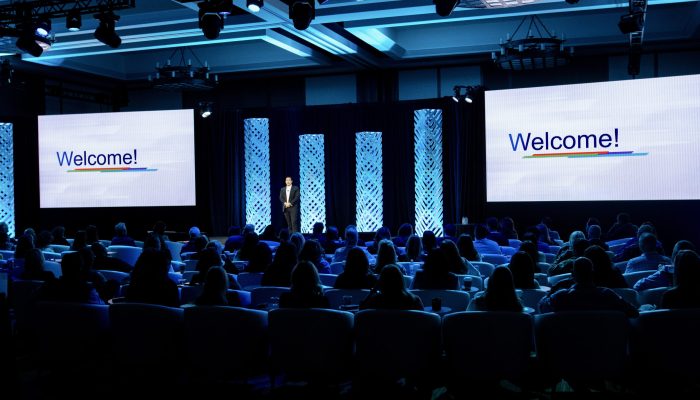
DEVLINHAIR’s work on the Annual Pharma NSM 2024 illustrates this connection between creative strategy and execution. The national sales meeting brought together immersive environments, multimedia content, general sessions, breakouts, patient stories, recognition moments, and audience participation around a unified vision. The value was not simply in staging a large meeting; it was in creating an experience that helped teams understand the message and connect it to their role.
When production is designed around purpose, consistency becomes a strength rather than a constraint. Audiences experience a clear story across touchpoints, while organizations gain a more useful framework for planning future meetings, launches, and training moments.
Designing Experiences Across Formats and Audiences
Corporate audiences rarely engage through one format alone. Some participants may be present in a room, others may join remotely, and still others may encounter selected content afterward. Custom event production needs to account for these different experiences from the start rather than treating them as secondary extensions of the live program.
For a live audience, the environment, pacing, staging, sound, lighting, and in-room interaction help build energy and connection. For a remote audience, camera coverage, streaming quality, digital navigation, moderated interaction, and access to relevant resources help make participation purposeful. For an on-demand audience, the experience may need editing, context, captioning, or a more focused structure before it becomes useful.
The aim is not to make every audience experience identical. It is to ensure each audience can engage with the same underlying purpose. A product launch should make the product story clear wherever a stakeholder participates. A training event should provide opportunities for learning and application across settings. A leadership meeting should make priorities understandable and actionable beyond the physical room.
DEVLINHAIR’s Aflac Focus Fest combined a festival-inspired live sales leadership meeting with a customized virtual meeting platform supporting approximately 5,000 virtual participants alongside 1,000 in-person attendees. Main stage content, selected breakouts, agenda resources, live broadcasts, and extended content access helped the program reach audiences through a connected hybrid experience.
Supporting Product Launches and Brand Milestones
Product launches and brand milestones often require organizations to communicate complex information with clarity while also creating a moment people will remember. A production strategy for these experiences needs to do more than create visual impact. It should help audiences understand what is new, why it matters, and how it connects to the organization’s larger story.
Live production can make a technical or strategic message tangible through environmental design, media, demonstrations, expert perspectives, and facilitated audience engagement. When the experience is planned with future use in mind, key moments can also become useful content for stakeholders, sales teams, partners, or internal audiences after the event concludes.
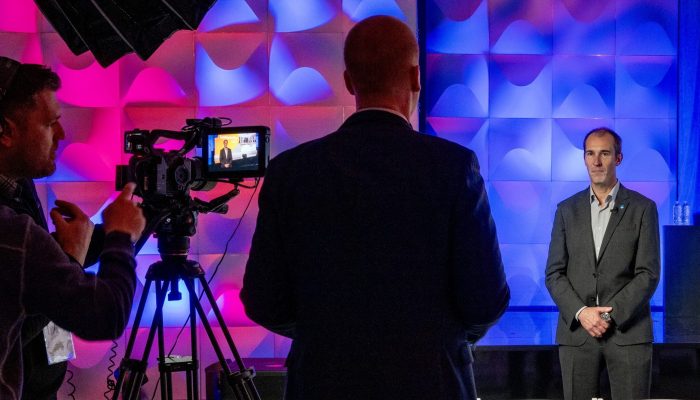
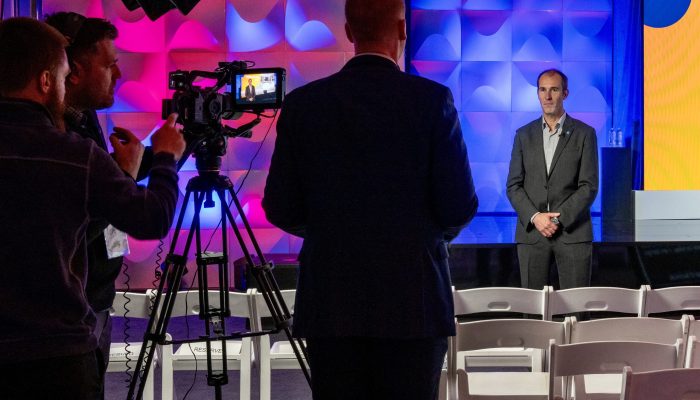
For the Novartis RLT facility opening event, DEVLINHAIR helped transform a significant pharmaceutical manufacturing milestone into a carefully produced press event that communicated innovation and patient impact. The experience brought together environment, production, communications strategy, content development, staging, lighting, audio, and audience engagement around a consequential story.
Recent BizBash coverage of Canva Create 2025 similarly showed how a brand event can translate its product and culture into interactive spaces and hands-on learning. For production leaders, the lesson is useful: experiences become more compelling when audiences can explore the idea rather than simply listen to it being described.
Connecting Production With Learning and Communication
Corporate events increasingly need to support more than attention in the moment. Audiences may need to understand a new strategy, develop confidence in a product narrative, practice a new behavior, engage with leaders, or continue a conversation after the live experience ends. That is where production, learning design, and communication planning need to work together.
A training experience may combine live instruction with breakout discussions, practice activities, digital resources, and follow-up reinforcement. A national meeting may use a central narrative, patient or customer stories, leadership messaging, interactive commitments, and post-event materials to help participants translate an experience into action. A product launch may require content that helps different audiences understand the same offering at different levels of detail.
Production decisions influence whether those objectives are achieved. Speakers need preparation that supports the audience journey. Visuals should clarify rather than overwhelm. Interaction should be chosen because it strengthens understanding or connection. Captured content should be designed around what audiences may need to revisit afterward, not simply around what can be recorded.
This approach also makes an event more adaptable. When the core message, content structure, production framework, and learning objective are clear, organizations can extend a program across audiences and formats without losing its purpose. The event becomes more than a single occasion; it becomes part of an ongoing communication and engagement strategy.
Planning for Measurement and Follow-through
Scalable event production is most valuable when organizations can understand whether the experience achieved its objective. Attendance remains useful, but it does not reveal whether audiences understood the message, participated meaningfully, used resources afterward, or felt prepared to act on what they learned.
The right measures depend on the purpose of the event. A leadership summit may examine confidence, alignment, questions submitted, or post-meeting communication engagement. A training program may consider completion, comprehension, practice activity, or reinforcement. A product launch may assess stakeholder engagement, follow-up interest, message adoption, or sales readiness.
Event Marketer’s reporting on event measurement strategies highlights the increasing importance of connecting event data to the broader customer or audience journey. For organizations building repeatable meeting and event programs, that perspective can help teams evaluate not only the experience itself, but also what the experience enabled afterward.
Follow-through matters for the same reason. A well-produced moment can create attention, but audiences often need continued resources, reminders, discussion, or learning support before a message leads to action. When content planning and measurement are integrated early, each event can inform and strengthen the next one.
Building Experiences That Can Grow With the Organization
Custom event production is ultimately about creating experiences that are appropriate to the moment and useful beyond it. Organizations need the flexibility to support a leadership gathering, launch, sales meeting, training program, press event, or hybrid experience while preserving the quality and clarity audiences expect.
That does not require every organization to build a larger event calendar or produce more content than audiences need. It requires thoughtful choices about what matters most: the message, the audience, the desired action, the production approach, and the moments that should continue after the event ends.
For leaders responsible for communication, learning, or engagement, a production partner can help translate those priorities into an experience people can follow, feel, and remember. When strategy guides the work, creativity shapes the story, and precision brings it to life, events can become meaningful platforms for alignment, learning, brand expression, and action.
Frequently Asked Questions
What are custom event production services?
Custom event production services bring together strategy, creative direction, content, environment design, technical execution, audience engagement, and measurement to create experiences aligned with a specific organizational objective. These services can support leadership meetings, product launches, national sales meetings, press events, training programs, live experiences, and hybrid formats.
How can custom event production support scalable experiences?
Custom event production can support scalable experiences by establishing a clear message, creative framework, production standard, content approach, and audience journey that can be adapted across formats or related programs. This helps organizations maintain consistency while designing each experience for its particular audience, setting, and objective.
What should organizations prioritize when selecting an event production approach?
Organizations should begin with the purpose of the experience and what the audience needs to understand, feel, or do afterward. From there, strategy, storytelling, learning design, environment, technology, facilitation, content capture, and measurement can be planned as one connected system rather than as separate production decisions.
Disclaimer: The above helpful resources content contains general insights and perspectives for informational purposes only. The information provided is for general knowledge and does not constitute professional advice.
You may also be interested in: DEVLINHAIR Delivering on a Unified Vision
When your most important meeting, launch, summit, or training experience needs to move people, every detail matters. Strategy guides the work. Creativity shapes the story. Precision brings it to life. DEVLINHAIR Production & Learning designs and produces action-driven meetings, live events, and training experiences that move audiences. From our New York City studio, DEVLINHAIR helps organizations bring complex ideas, leadership priorities, and learning moments to life with clarity, purpose, and production precision. Ready to create a hybrid experience your audience can follow, feel, and act on? Let’s talk.
Powered by flareAI.co