Artificial intelligence can help event teams work more efficiently, but the value of a meeting, launch, or training experience still depends on human judgment. Organizations need audiences to understand the message, participate at the right moments, and leave with a clearer sense of what comes next. Technology is useful when it helps producers and communicators make those experiences more purposeful, not when it becomes the experience itself.
For corporate events, AI tools can support planning, content organization, audience insights, accessibility, post-event follow-through, and selected moments of personalization. The opportunity is not to automate creativity or connection. It is to use technology carefully so teams have more capacity to focus on strategy, storytelling, learning, and the details that help important experiences move audiences.
When your most important meeting, launch, summit, or training experience needs to move people, every detail matters. Strategy guides the work. Creativity shapes the story. Precision brings it to life. DEVLINHAIR Production & Learning designs and produces action-driven meetings, live events, and training experiences that move audiences. From our New York City studio, DEVLINHAIR helps organizations bring complex ideas, leadership priorities, and learning moments to life with clarity, purpose, and production precision. Ready to create a hybrid experience your audience can follow, feel, and act on? Let’s talk.
AI as Support for Purposeful Event Experiences
Corporate meetings and events often involve complex planning decisions before an audience ever enters the room. Teams must coordinate agendas, speakers, production requirements, attendee communication, content assets, accessibility needs, hybrid participation, and post-event resources, all while protecting the message the experience is intended to deliver.
AI tools can support parts of that process by helping teams organize information, identify patterns in registration or engagement data, summarize planning inputs, recommend content or session pathways, and manage selected repetitive tasks. Used responsibly, these capabilities can give producers and communication leaders more time to focus on the audience journey and the business purpose behind the event.
The distinction matters. A strong leadership meeting is not successful because a tool helped assemble a schedule. A training experience does not become meaningful because data can be processed faster. The value still comes from a clear narrative, purposeful participation, credible content, skilled facilitation, and precise execution.
BizBash reporting on how event professionals use AI in day-to-day event work points to applications including meeting recaps, attendee survey analysis, session recommendations, multilingual translation, and content summaries. These uses are relevant because they support the event team’s work without replacing the human decisions that shape the experience.
Planning With Greater Clarity and Efficiency
Planning a high-stakes meeting or live event involves more than logistics. The team may need to understand which audiences are attending, which content needs additional support, where sessions overlap, which resources will be useful afterward, and how live and remote participants will move through the program.
AI-assisted tools may help teams review planning information more quickly, group attendee interests, summarize feedback from past programs, organize production notes, or identify recurring questions that should shape the agenda. For a complex national meeting or hybrid event, that support can reduce administrative friction and help teams make more informed planning decisions earlier.
Yet efficiency should not determine the design on its own. Event teams still need to decide what the audience should understand, what emotional or learning journey supports that objective, and which moments deserve the greatest creative and production attention. Technology can help make information manageable; it cannot determine what a meeting should mean to the people attending it.
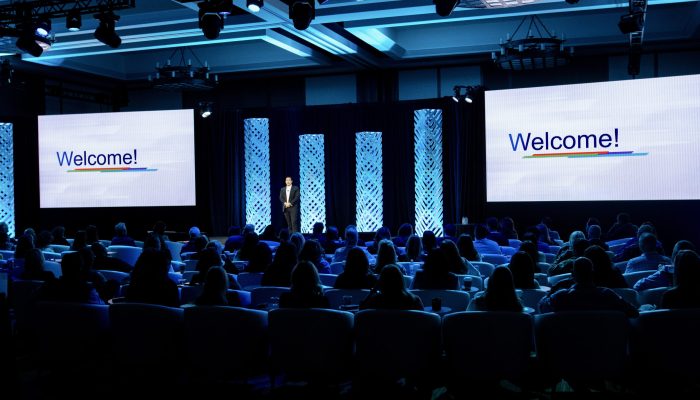
DEVLINHAIR’s work on the CNS National Meeting 2024 illustrates why this strategic foundation matters. The experience was built around leadership insight, learning, connection, and a storytelling approach designed to help attendees navigate an important organizational moment. Tools may support production workflows, but the clarity of purpose is what gives a meeting lasting value.
Applying AI Across Content, Participation, and Follow-through
An event audience is rarely one uniform group. A leadership team, a sales organization, a product audience, training participants, and virtual attendees may all bring different questions and different needs to the same program. Thoughtful use of AI can help event teams understand those differences and provide more relevant pathways through an experience.
Registration inputs, selected interests, session activity, submitted questions, and post-event feedback may help organizers identify which content is most useful to different audiences. AI-enabled platforms can support recommendations for sessions or resources, assist with content summaries, or help teams review large volumes of audience feedback more efficiently.
These applications are most useful when they improve access and relevance without making participation feel impersonal. An attendee should not feel managed by an algorithm. They should feel that the program anticipates their needs, provides clear ways to engage, and makes important information easier to locate and use.
At the same time, teams need to make careful decisions about what information is collected, why it is needed, how it is protected, and how recommendations are presented. Personalization has value only when it is transparent, appropriate, and connected to a meaningful audience benefit.
Supporting Live and Hybrid Participation
Live and hybrid experiences create moments where audience needs become visible in real time. Questions may reveal that a concept requires clarification. Polling may show that a group is interpreting a message differently than expected. Remote participants may need additional facilitation or access to resources that in-room attendees can experience more naturally.
AI-supported tools can help event teams organize incoming questions, monitor engagement signals, provide automated captioning or translation, and assist with session summaries or follow-up materials. In a hybrid program, these capabilities may help producers and moderators recognize when one audience needs more support or when a key message should be reinforced across formats.
Hybrid capabilities work best when technology is integrated into an intentional experience design. Remote participation should not be an afterthought, and AI should not be used simply because it is available. The agenda, facilitation, platform, production environment, content, and audience interaction should all be designed around what participants need in order to understand and engage.
DEVLINHAIR’s Aflac Focus Fest experience demonstrates the importance of connected hybrid production, combining live and virtual participation through main stage content, selected breakouts, agenda resources, broadcasts, and extended digital access. For organizations considering AI-enabled engagement tools, the same principle applies: technology should serve the audience journey and the message.
Making Content More Useful After the Experience
The value of an event does not end when the final session concludes. Leadership meetings, product launches, national sales programs, and training experiences often generate content that can reinforce messages, support learning, or help additional audiences understand what occurred.
AI tools may support this work by helping teams identify themes in audience questions, prepare session summaries, organize recorded content, surface useful clips for review, or categorize post-event feedback. These capabilities can make it easier for communication and learning teams to determine which resources deserve continued attention.
That does not mean every moment should be captured or distributed. The most effective follow-through is selective and purposeful. A concise leadership recap, a clearly structured learning resource, a useful product explanation, or a set of responses to recurring audience questions may be more valuable than a large archive of material with no clear path for use.
For event teams, AI can help make content more manageable. Strategy still determines which messages need a longer life, which audiences require follow-up, and how the experience should continue supporting action after the live moment ends.
Keeping Human Connection at the Center
Events matter because people experience ideas together. They hear leaders speak with conviction, engage with stories, ask questions, connect with colleagues, explore new information, and build shared understanding. Artificial intelligence may support parts of that process, but it cannot replace the trust and emotion that make an experience meaningful.
This is especially important in high-stakes settings. A product launch may need to create confidence around a complex story. A leadership meeting may need to reconnect teams during uncertainty. A training experience may need to help participants translate information into behavior. In each case, technology is valuable only when it makes the human purpose of the experience clearer and easier to achieve.
Recent Event Marketer coverage of AI language translation tools for B-to-B events points to the growing role of real-time translation in supporting more accessible and inclusive audience experiences. That framing is particularly relevant for organizations responsible for meaningful meetings and live experiences: the right question is not how much can be automated, but where technology can responsibly improve the audience experience.
Responsible Use, Accessibility, and Measurement
Any use of AI in event planning or execution should include thoughtful consideration of privacy, consent, accuracy, accessibility, security, bias, and the appropriate role of human review. Event programs may involve attendee information, recorded sessions, submitted questions, learning activity, internal business content, or other material that should be handled responsibly.
Accessibility is one area where carefully selected tools can provide meaningful support. Captioning, transcription, translation, structured content summaries, and easier access to relevant resources can help more audiences participate. These capabilities should be reviewed for accuracy and built into an inclusive production plan rather than treated as automatic solutions.
Measurement also requires judgment. Tools can organize engagement data, questions, attendance patterns, content interaction, and feedback, but teams still need to decide what success means. A leadership meeting may prioritize alignment. A training program may prioritize comprehension and application. A product launch may prioritize clarity, confidence, and stakeholder action.
When the objective is defined early, AI-supported analysis can help teams understand what resonated and where future experiences may improve. The outcome should not be more data for its own sake. It should be a clearer view of whether an experience helped people understand, participate, and act.
Using AI With Intention in Event Production
Artificial intelligence offers event teams practical tools for organizing complexity, supporting access, strengthening follow-up, and learning from audience engagement. Those capabilities can be valuable for meetings and events that need to operate across audiences, formats, and content needs.
The opportunity is greatest when organizations use AI deliberately. Technology should help producers protect time for creative strategy, improve clarity for audiences, support meaningful participation, and make useful content more accessible after the event. It should not distract from the reason people were brought together in the first place.
For leaders planning a meeting, launch, summit, or training experience, the central question remains human: what should the audience understand, feel, and do afterward? When AI tools are selected in service of that answer, they can support more responsive and thoughtful production while leaving the essential work of connection where it belongs.
Frequently Asked Questions
How can artificial intelligence support corporate event planning?
Artificial intelligence can support corporate event planning by helping teams organize information, summarize planning inputs, review feedback, identify audience interests, prepare selected content resources, and manage repetitive tasks more efficiently. These tools are most useful when they create more time and clarity for the human work of shaping strategy, storytelling, learning, and audience engagement.
How can AI improve live and hybrid event experiences?
AI-enabled tools can support live and hybrid experiences through capabilities such as captioning, translation, session recommendations, question organization, content summaries, and review of selected engagement signals. These tools should be used as part of an intentional audience journey so that both in-room and remote participants can understand the message and participate meaningfully.
What should organizations consider before using AI in event production?
Organizations should define the purpose of the tool, identify what audience information or content it may use, establish appropriate privacy and consent practices, review outputs for accuracy, consider accessibility needs, and keep human judgment central to planning and delivery. AI should support a stronger audience experience rather than replace authentic storytelling, facilitation, or connection.
Disclaimer: The above helpful resources content contains general insights and perspectives for informational purposes only. The information provided is for general knowledge and does not constitute professional advice.
You may also be interested in: DEVLINHAIR CNS National Meeting 2024
When your most important meeting, launch, summit, or training experience needs to move people, every detail matters. Strategy guides the work. Creativity shapes the story. Precision brings it to life. DEVLINHAIR Production & Learning designs and produces action-driven meetings, live events, and training experiences that move audiences. From our New York City studio, DEVLINHAIR helps organizations bring complex ideas, leadership priorities, and learning moments to life with clarity, purpose, and production precision. Ready to create a hybrid experience your audience can follow, feel, and act on? Let’s talk.
Powered by flareAI.co