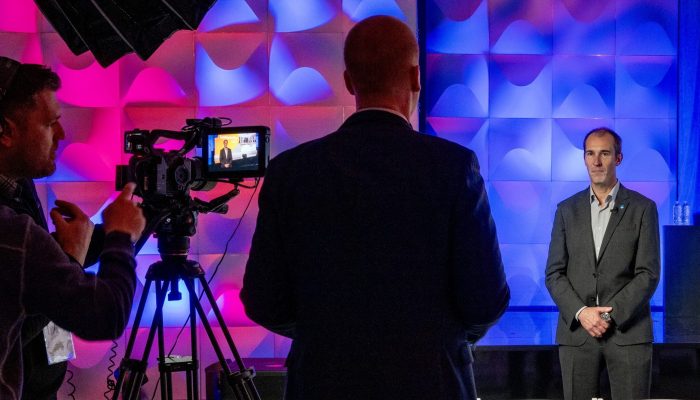
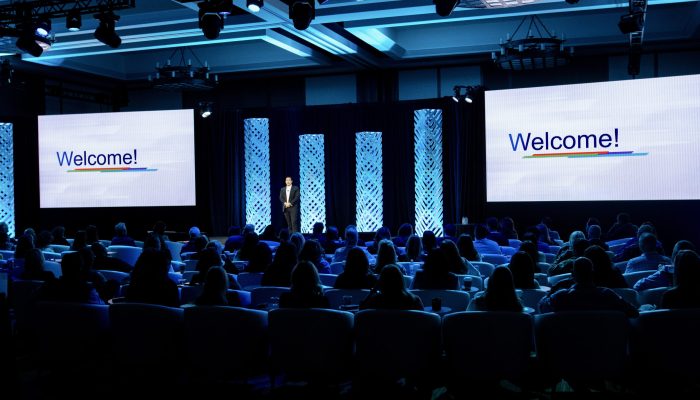
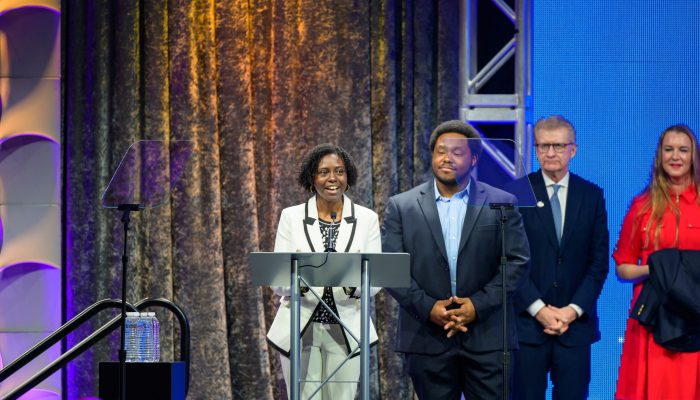
A leadership meeting can create clarity, energy, and alignment in the room. The harder question is what happens after the audience leaves. Without a plan for capturing and extending the most important messages, even a well-produced summit, national meeting, or strategy session can lose momentum once teams return to their day-to-day work.
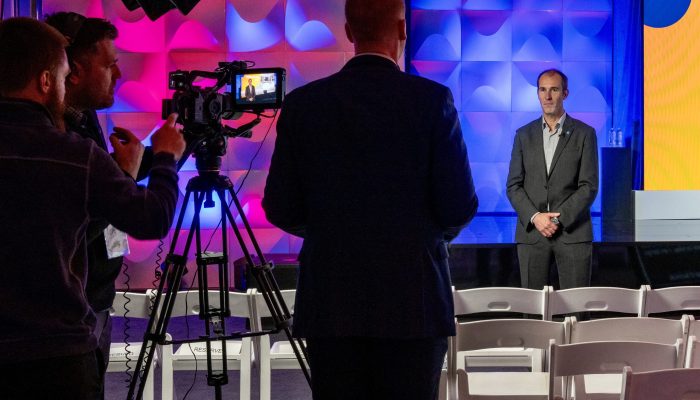
Meeting content creation gives organizations a way to extend the value of a live experience. Keynote moments, leadership perspectives, participant insights, workshop takeaways, and learning materials can become useful resources that reinforce priorities, support follow-up conversations, and help distributed teams stay connected to the message long after the event ends.
When your most important meeting, launch, summit, or training experience needs to move people, every detail matters. Strategy guides the work. Creativity shapes the story. Precision brings it to life. DEVLINHAIR Production & Learning designs and produces action-driven meetings, live events, and training experiences that move audiences. From our New York City studio, DEVLINHAIR helps organizations bring complex ideas, leadership priorities, and learning moments to life with clarity, purpose, and production precision. Ready to create a hybrid experience your audience can follow, feel, and act on? Let’s talk.
Leadership Meetings as Ongoing Communication Experiences
Leadership events are often designed around a defining moment: a new strategy, a shift in direction, a product milestone, a sales objective, or a need to reconnect teams around shared purpose. Those moments matter in the room, but their lasting value depends on whether people can continue to understand, discuss, and act on what they heard.
That is why content planning has become an important part of meeting strategy. An executive presentation can be shaped into a concise internal recap. A leadership conversation can become a follow-up resource for managers. A workshop can generate learning materials that help teams apply ideas after the event. When planned intentionally, content capture does not dilute the live experience. It helps the experience continue doing its work.
This approach is especially relevant when organizations need to communicate across teams, functions, or locations. DEVLINHAIR’s work on the CNS National Meeting 2024 centered on strategic messaging architecture, leadership insight, learning, and a narrative designed to motivate attendees around a unified future. Experiences like these show why the meeting message should be considered not only in terms of what happens onstage, but also in terms of what audiences carry forward.
Meeting content creation is therefore less about producing more material and more about identifying the moments worth preserving. The objective is to capture the ideas, stories, commitments, and learning points that can reinforce the purpose of the event over time.
Turning Live Moments Into Useful Content
Not every moment in a leadership meeting needs to be recorded or repurposed. The most effective content strategies begin by identifying which messages need a longer life. A leadership vision, strategic priority, customer story, patient perspective, product update, or participant commitment may deserve follow-up because it helps audiences understand why the meeting mattered and what should happen next.
That content can take several forms. Edited keynote highlights can reinforce priorities for those who attended and provide context for those who could not. Executive interviews can clarify strategic decisions. Workshop summaries can support team discussions. Short video moments can make an important story easier to revisit. Learning resources can connect inspiration from the event to practical action afterward.
Event Marketer’s coverage of Canva Create 2024 illustrates how a leadership-led keynote platform can expand into a broader experience with sessions, product learning, hands-on engagement, and virtual access to important announcements. The example is useful because it shows how a central meeting message can be designed to reach audiences through more than one moment or format.
For leadership teams, the priority should be relevance. Captured content is most valuable when it supports a real communication objective: helping employees understand a change, helping managers continue a conversation, helping sales teams communicate a message consistently, or helping audiences translate an event experience into action.
Building Content Creation Into the Meeting Strategy
Content creation works best when it is considered before the stage is built and before the agenda is final. A meeting designed only for the live room may include powerful moments that are difficult to capture clearly or repurpose meaningfully. A meeting planned with content in mind can preserve authenticity while ensuring the most important ideas are accessible after the program ends.
This begins with clear decisions about the audience and the intended outcome. Leaders should determine what participants need to understand during the event, what they may need to revisit later, and which messages should be shared more broadly. Those choices can inform session structure, speaker preparation, camera coverage, visual design, interview opportunities, audience interaction, accessibility support, and post-event distribution.
For example, DEVLINHAIR’s Annual Pharma NSM 2024 work included multimedia content, custom videos, patient stories, general sessions, breakouts, and an interactive commitment installation whose messages became part of the leadership close. The value of that approach lies in the connection between narrative, audience participation, and the meeting’s larger purpose.
When content strategy, creative direction, production, and leadership communication are aligned early, captured assets are more likely to feel purposeful rather than incidental. The result is not simply a library of footage. It is a more coherent communication experience that supports the meeting before, during, and after the live program.
Content That Supports Learning and Follow-through
Leadership meetings frequently ask audiences to absorb complex information or adopt new behaviors. That makes learning design an important consideration in meeting content creation. Inspiration can be powerful in the moment, but people often need reinforcement, reflection, and practical resources before a new message influences their daily work.
A leadership session can be extended through manager conversation guides, topic-specific video clips, post-meeting learning modules, decision-making exercises, reference materials, or follow-up communications. These resources help organizations move beyond event recall toward understanding and application.
This is particularly valuable for national meetings, sales programs, change initiatives, product education, and leadership development experiences. In each case, the audience is expected to do something with the message after the event. Content that is structured around those next steps can help the meeting become part of a larger learning and communication journey.
The strongest follow-through strategies are selective. Audiences do not need every session reproduced in full. They need the content that makes priorities clearer, helps conversations continue, and supports the behaviors or decisions the meeting was designed to influence.
Extending Reach Through Live, Hybrid, and On-demand Formats
Meeting content creation also supports audiences who cannot experience every moment in the same way. A leadership summit may include people attending in person, joining virtually, viewing selected sessions later, or receiving a curated recap through internal communications. A thoughtful content strategy can help each audience access what is most relevant without reducing the live meeting to a simple broadcast.
Hybrid capabilities can be especially useful when an organization needs to connect a larger distributed audience to leadership messaging and meeting resources. DEVLINHAIR’s Aflac Focus Fest experience combined live and virtual elements for approximately 1,000 in-person attendees and 5,000 virtual participants, with main stage content, selected breakouts, agenda assets, and measurable engagement through a customized meeting platform.
The important distinction is that content should be shaped for its intended setting. A message designed for a live stage may need editing, context, captioning, or a different visual structure before it works well as an on-demand resource. A workshop recap may be more useful than a full recording. A concise leadership message may create more clarity than a long archive of sessions.
When formats are planned intentionally, content helps extend access while preserving the energy and meaning of the original meeting. It allows important ideas to travel further without asking audiences to recreate the entire live experience on their own.
Measuring the Value Beyond the Live Event
A leadership meeting should be measured by more than attendance or applause in the room. Organizations also need to understand whether audiences engaged with the message, whether resources were used afterward, and whether the experience helped support the intended business or learning outcome.
Useful measures may include content views, completion rates, questions submitted, resource downloads, participation in follow-up sessions, manager feedback, knowledge checks, or evidence that key messages are being applied consistently across teams. For an internal meeting, the relevant outcome may be alignment and confidence. For a sales meeting, it may be readiness and message adoption. For a training experience, it may be comprehension and follow-through.
Recent Event Marketer reporting on event measurement strategies highlights the growing attention placed on understanding audience engagement with content rather than relying only on basic participation counts. For meeting leaders, that principle matters because captured content creates opportunities to observe which messages continue to resonate after the event itself.
Measurement should begin with the objective rather than the tool. When organizations define the intended result early, they can make clearer decisions about which moments to capture, which content to distribute, and which signals will indicate that the experience achieved its purpose.
Practical Priorities for Leadership and Communication Teams
Effective meeting content creation begins with a small number of practical priorities. Identify the messages that need a longer life. Determine which audiences will need access after the event. Plan capture and production around the most useful moments. Build follow-up resources that support action rather than adding noise.
Teams should also address consent, accessibility, privacy, content ownership, and distribution requirements during planning rather than after assets have already been created. When meetings include employee stories, audience participation, recorded discussions, or sensitive business information, responsible handling is essential to maintaining trust and usability.
Above all, content should remain connected to the purpose of the meeting. Leadership events are not made more valuable simply by generating more assets. They become more valuable when the right moments are captured with intention and used to help people remember, understand, and act on what brought them together in the first place.
Frequently Asked Questions
What is meeting content creation for leadership events?
Meeting content creation is the intentional process of identifying, capturing, shaping, and sharing important moments from a leadership meeting, summit, national meeting, or strategy session. These assets may include keynote highlights, executive perspectives, workshop recaps, participant insights, learning materials, or follow-up resources designed to reinforce key messages after the live experience ends.
Why should content planning begin before a leadership meeting takes place?
Content planning is more effective when it begins early because the agenda, production environment, speaker preparation, visuals, audience interaction, and follow-up strategy can then support the same objective. This helps organizations capture useful, authentic moments rather than trying to repurpose material after the event without a clear plan for how it will be used.
How can organizations extend the value of a leadership meeting after the event?
Organizations can extend meeting value by sharing selected leadership messages, creating recap resources, developing manager discussion guides, distributing relevant learning materials, providing accessible on-demand content, and measuring whether audiences continue engaging with the priorities introduced during the event. The most effective approach focuses on content that supports understanding and action rather than simply preserving every session.
Disclaimer: The above helpful resources content contains general insights and perspectives for informational purposes only. The information provided is for general knowledge and does not constitute professional advice.
You may also be interested in: DEVLINHAIR Sparking Relationships In Healthcare Marketing
When your most important meeting, launch, summit, or training experience needs to move people, every detail matters. Strategy guides the work. Creativity shapes the story. Precision brings it to life. DEVLINHAIR Production & Learning designs and produces action-driven meetings, live events, and training experiences that move audiences. From our New York City studio, DEVLINHAIR helps organizations bring complex ideas, leadership priorities, and learning moments to life with clarity, purpose, and production precision. Ready to create a hybrid experience your audience can follow, feel, and act on? Let’s talk.
Powered by flareAI.co