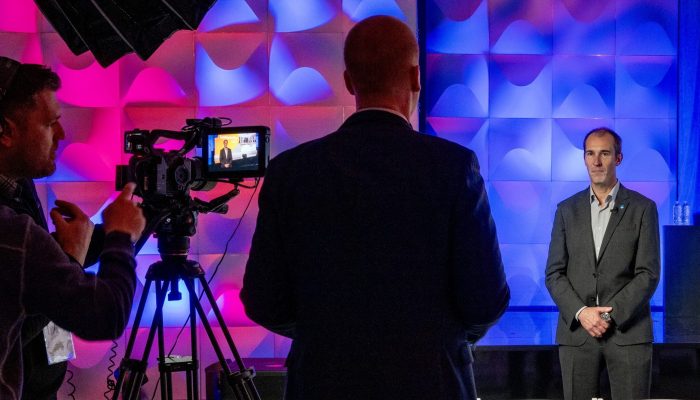
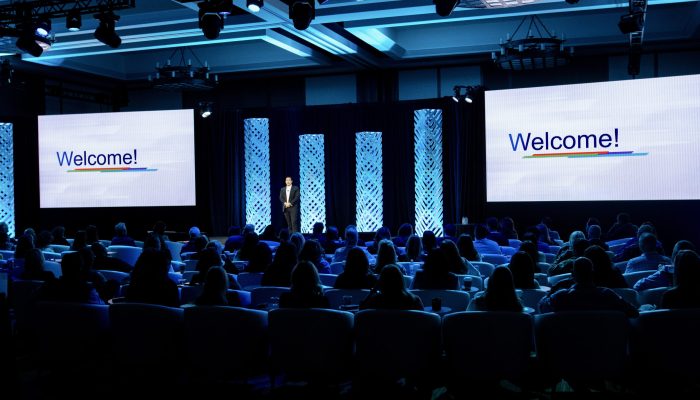
When leaders gather teams for high-stakes training or showcase new products to partners and customers, the core challenge remains consistent: delivering an equally powerful experience whether attendees are in the room or joining from across the country. Hybrid event design has evolved from a temporary solution into a strategic advantage for organizations that prioritize meaningful communication and measurable impact.
At its best, hybrid design merges the energy of live gatherings with the reach and flexibility of digital participation. It enables corporate training programs to scale effectively while giving product demonstrations the interactivity and storytelling depth they deserve. This approach focuses not on technology for its own sake, but on creating experiences that foster alignment, deeper understanding, and lasting action.
When your most important meeting, launch, summit, or training experience needs to move people, every detail matters. Strategy guides the work. Creativity shapes the story. Precision brings it to life. DEVLINHAIR Production & Learning designs and produces action-driven meetings, live events, and training experiences that move audiences. From our New York City studio, DEVLINHAIR helps organizations bring complex ideas, leadership priorities, and learning moments to life with clarity, purpose, and production precision. Ready to create a hybrid experience your audience can follow, feel, and act on? Let’s talk.
Why Hybrid Capabilities Have Become Essential for Corporate Communication
Organizations around the world have recognized that hybrid formats deliver far more than logistical convenience. These capabilities create meaningful opportunities to connect distributed teams while preserving the human elements that make events memorable. Whether hosting a leadership summit, sales kickoff, or technical training session, thoughtful hybrid design ensures consistent messaging reaches every participant who needs it.
This shift mirrors broader changes in how work gets done. With teams spread across regions and time zones, the ability to participate meaningfully whether in person or remotely has become a competitive necessity. Hybrid event design supports stronger knowledge retention and better real-world application of concepts once employees return to their roles.
Leaders in corporate communications and learning & development increasingly view hybrid capabilities as core infrastructure rather than an optional add-on. The focus has moved toward designing unified experiences that serve both live and remote audiences with equal intention and quality.
Transforming Corporate Training Through Thoughtful Hybrid Design
Corporate training has evolved from traditional one-way presentations into dynamic, interactive, multi-format experiences. Hybrid capabilities allow learning and development teams to engage both in-room attendees and remote participants with the same level of care and creativity. Features such as breakout discussions, real-time polling, hands-on simulations, and facilitated group work can now include everyone equally.
Practical applications span leadership development programs, employee onboarding, sales training, compliance sessions, and ongoing professional development. The format particularly benefits distributed workforces by offering repeatable content delivery and stronger message consistency across multiple locations. Organizations gain improved access for all employees while maintaining the collaborative spirit essential for genuine learning.
Rather than treating remote participants as secondary, effective hybrid training creates parallel experiences that feel integrated and valuable for every attendee. This intentional design leads to higher engagement levels and better transfer of skills back into daily work.
Making Product Demonstrations More Immersive and Inclusive
Product demonstrations have transformed from static presentations into dynamic brand experiences that combine physical interaction with digital reach. Hybrid design enables organizations to showcase innovations to both in-person audiences and remote stakeholders simultaneously. This includes live product handling, close-up video feeds, expert commentary, and real-time audience questions from multiple locations.
The result is more effective product education and extended engagement windows. Attendees can explore the details most relevant to their context whether evaluating solutions for their operations or preparing to brief their own teams. Captured content can be clipped, shared, and repurposed across sales enablement, training, and marketing channels.
This flexibility proves especially valuable for manufacturers, technology providers, and B2B companies that need to reach geographically dispersed audiences without constant repetition of live demonstrations.
Hybrid Event Design in Action: Notable Examples
Several organizations have successfully implemented strategic hybrid approaches that deliver tangible results. ABB, a global technology company focused on electrification and automation, created an immersive exhibit experience at NECA 2024, the National Electrical Contractors Association Convention & Trade Show, featuring interactive environments across multiple product lines. The exhibit used technology-driven product storytelling to increase attendee engagement and dwell time while balancing education with memorable brand moments.
Kubota, a manufacturer of tractors, construction equipment, and agricultural machinery, used a hybrid dealer meeting to integrate live presentations, streamed content, branded environments, and hands-on product demonstrations into a cohesive experience that effectively connected teams across locations. Similarly, Squarespace’s Circle Day in New York City supported members of its Circle partner community with in-person programming at Squarespace HQ while also offering meaningful online participation for those joining virtually.
These examples illustrate how hybrid thinking extends beyond basic streaming to create unified experiences that serve multiple audiences without compromise. Exploring similar hybrid production approaches reveals the power of purposeful design in bringing key messages to life.
Common Challenges and How to Address Them
Successful hybrid events require more than simply adding cameras to an in-person gathering. Teams must navigate several practical challenges to create truly effective experiences:
- Designing balanced participation so remote attendees feel fully included rather than secondary
- Managing production complexity across both physical and digital environments
- Maintaining audience attention and energy throughout extended sessions
- Facilitating natural interaction that works seamlessly across formats
- Aligning content strategy with available technology and team capabilities
- Measuring meaningful outcomes beyond basic attendance metrics
The most effective solutions begin with clear strategy and deep audience understanding rather than technology selection alone. Creative direction, thoughtful audience journey mapping, and detailed production planning distinguish acceptable hybrid events from truly impactful ones.
The Strategic Business Advantages of Hybrid Design
When executed with intention, hybrid capabilities deliver significant organizational benefits. Companies can reach broader audiences, including those unable to travel due to schedule, budget, or geographic constraints. Content becomes reusable across training initiatives, sales enablement, and ongoing internal communications. Learning retention improves through access to recorded sessions and on-demand resources.
Product communication grows more efficient as demonstrations serve multiple stakeholder groups without repeated live events. Accessibility increases for distributed teams spanning North America and Europe. Most importantly, organizations gain the flexibility to design experiences that precisely match their strategic objectives rather than forcing audiences into rigid, one-size-fits-all formats.
Industry sources highlight sustained adoption of hybrid formats, with organizations valuing the broader reach and cost efficiencies these approaches provide while maintaining the impact of in-person connection.
Practical Considerations for Planning Your Next Hybrid Experience
Event and learning leaders should begin with clearly defined audience needs and business objectives before selecting platforms or production approaches. Design both the in-room and remote journeys from the outset. Build meaningful interaction into every major session instead of treating it as an afterthought.
Create visual and experiential moments that translate effectively across formats. Align production, learning design, and messaging teams early in the planning process. Measure success through engagement metrics, knowledge retention, application of concepts, and broader business outcomes rather than attendance numbers alone.
Approaching hybrid events as a comprehensive communication strategy rather than merely an event format leads to stronger results and more satisfied participants.
Looking Forward: Hybrid as a Long-term Capability
The conversation has evolved from debating whether hybrid events belong in the corporate mix to determining how organizations can design them intentionally for maximum impact. Forward-thinking teams are integrating live production expertise with learning design principles, adopting hybrid-first planning approaches, and emphasizing personalization alongside measurable results.
For organizations that depend on corporate meetings, training experiences, and product launches to drive alignment and growth, strong hybrid capabilities have become essential competencies. Those who invest in thoughtful, strategic design will be better positioned to create experiences that resonate, inform, and inspire regardless of where their audiences are located.
Frequently Asked Questions
How does hybrid event design improve corporate training for distributed teams?
Hybrid event design improves corporate training by creating parallel, equally engaging experiences for both in-person and remote participants rather than treating virtual attendees as secondary. Features like real-time polling, breakout discussions, and hands-on simulations can now include everyone, regardless of location. This approach supports stronger message consistency across distributed workforces and leads to better knowledge retention and real-world application of skills after the training ends.
What makes a product demonstration more effective when designed for hybrid audiences?
A hybrid product demonstration becomes more effective when it blends physical product interaction, high-quality close-up video, live expert commentary, and real-time Q&A tools into a single cohesive experience. This allows manufacturers, tech providers, and B2B companies to reach both in-room stakeholders and remote audiences simultaneously without repeating live demos. Captured content can also be repurposed for sales enablement, internal training, and marketing, extending the event’s value well beyond the live session.
What should companies prioritize when planning a hybrid corporate event or meeting?
Companies should start with clearly defined audience needs and business objectives before choosing any platform or technology. From the outset, both the in-room and remote audience journeys should be designed with equal intention, with meaningful interaction built into every major session. Aligning production, learning design, and messaging teams early and measuring success through engagement, knowledge retention, and business outcomes rather than attendance numbers alone is what separates impactful hybrid events from merely adequate ones.
Disclaimer: The above helpful resources content contains general insights and perspectives for informational purposes only. The information provided is for general knowledge and does not constitute professional advice.
You may also be interested in: DEVLINHAIR Personalizing Healthcare Marketing
When your most important meeting, launch, summit, or training experience needs to move people, every detail matters. Strategy guides the work. Creativity shapes the story. Precision brings it to life. DEVLINHAIR Production & Learning designs and produces action-driven meetings, live events, and training experiences that move audiences. From our New York City studio, DEVLINHAIR helps organizations bring complex ideas, leadership priorities, and learning moments to life with clarity, purpose, and production precision. Ready to create a hybrid experience your audience can follow, feel, and act on? Let’s talk.
Powered by flareAI.co