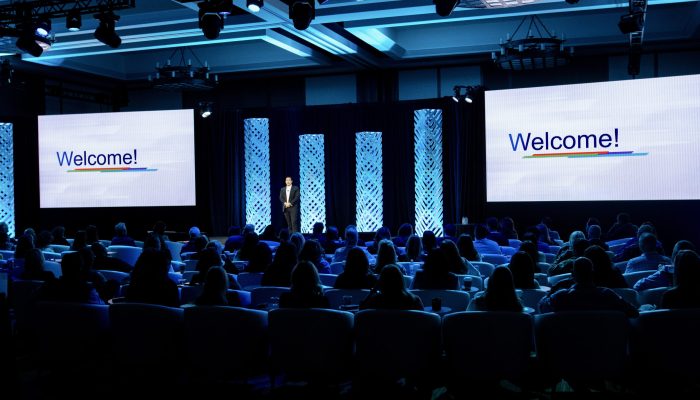
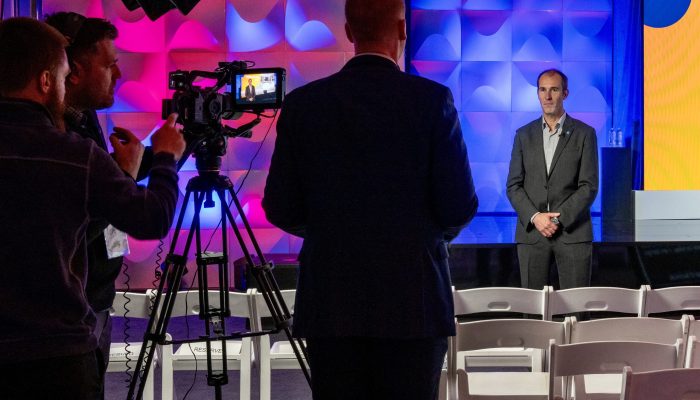
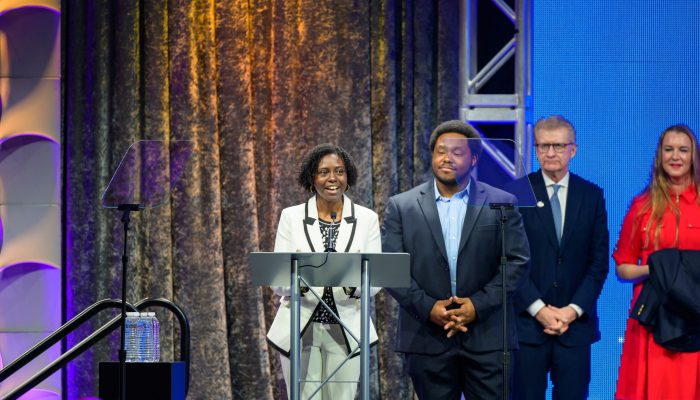
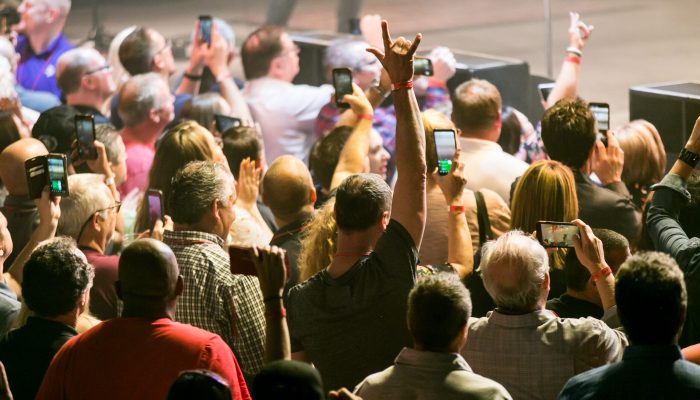
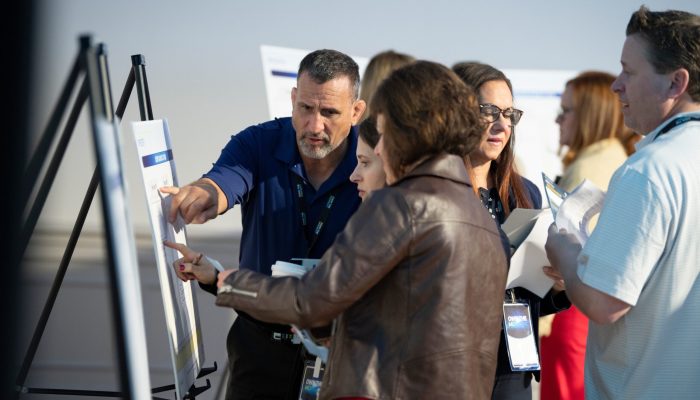
When a company brings people together for a leadership summit, training program, or product launch, the goal is rarely just to share information. The real challenge is helping people understand the message, connect it to their role, and leave ready to act. Expanding hybrid event programs can address distributed teams and broader reach, but it demands more than cameras and streaming links. Leaders must examine how every element of the experience serves the business outcome alignment, retention, and measurable impact before committing resources.
When your most important meeting, launch, summit, or training experience needs to move people, every detail matters. Strategy guides the work. Creativity shapes the story. Precision brings it to life. DEVLINHAIR Production & Learning designs and produces action-driven meetings, live events, and training experiences that move audiences. From our New York City studio, DEVLINHAIR helps organizations bring complex ideas, leadership priorities, and learning moments to life with clarity, purpose, and production precision. Ready to create a hybrid experience your audience can follow, feel, and act on? Let’s talk.
Defining Clear Objectives Before Adding Hybrid Layers
Business leaders often expand hybrid events with the assumption that more access equals more participation. Yet the most effective programs begin by asking what specific problem each audience segment needs solved. For in-person attendees, the focus might be deep engagement in complex discussions or hands-on skill-building. For virtual participants, it could be timely access to decision-makers or personalized follow-up resources. Without this foundation, digital additions risk feeling like an afterthought rather than a strategic extension.
This approach shifts the conversation from “how many more people can we reach?” to “how do we ensure every voice feels heard and every moment moves the organization forward?” Organizations that treat hybrid as a deliberate layer tied directly to their goals avoid the overload that comes from layering unrelated tech onto an existing event.
One way to ground the process is to map each audience segment to the exact value they bring. In-person teams often need immersive, sensory-rich interactions that reinforce culture and collaboration. Remote participants benefit from seamless integration of keynotes, workshops, and networking without technical friction. The result is a program where technology supports, rather than distracts from, the core business purpose.
Evaluating the Full Spectrum of Hybrid Capabilities
After setting objectives, the next step is to assess the range of tools available to support them. Hybrid capabilities now encompass far more than basic audio and video feeds. Modern platforms allow for interactive whiteboards, real-time polling, and AI-powered transcription that turns spoken words into searchable notes. Leaders should ask which of these tools directly address their audience’s needs whether it is fostering collaboration across time zones or capturing insights that feed back into project planning.
Equally important is understanding the production demands. Every added layer increases complexity in staffing, lighting, and connectivity. Leaders must weigh these factors against the expected return and decide if the investment aligns with their organization’s capacity for ongoing support.
Reassessing Budget and ROI in the Current Environment
Rising production and platform costs make every hybrid expansion a deliberate financial decision. Recent industry benchmarks show that 47 percent of event professionals remain “very concerned” about costs outpacing budgets, while 53 percent plan to increase their event budgets in 2024. At the same time, 70 percent still face difficulty demonstrating ROI for in-person and hybrid experiences, with 54 percent of U.S.-based marketers not tracking registrations as a baseline for impact.
These figures underscore the need for tighter financial cases than in previous years. Leaders should build their case around measurable outcomes such as pipeline growth or training retention rather than assumed reach. Credible attendee feedback loops and clear attribution become essential when justifying continued investment to finance and executive stakeholders.
Before committing more budget to a hybrid expansion, it helps to know how the broader B2B events market is actually performing right now. Recent industry benchmarking shows a generally optimistic mood among event professionals, with growing numbers of organizations describing live and digital programming as essential rather than optional to revenue growth. At the same time, rising costs remain a persistent pressure point, which means any leader proposing to widen a hybrid program needs a tighter financial case than in years past. Proving the return on these investments, and doing so with credible attendee feedback loops, continues to separate the programs that get renewed funding from those that get cut.
This is particularly relevant for organizations debating how far to extend virtual access, since digital components carry their own production, platform, and staffing costs that must be justified against measurable engagement rather than assumed reach. The data also points to shifting expectations around what audiences want from a hybrid format, reinforcing that expansion decisions should be grounded in current benchmarks instead of outdated assumptions carried over from the earlier hybrid boom. For decision-makers, this kind of current-year benchmarking data is useful ammunition when presenting a hybrid growth plan to finance or executive stakeholders, since it frames the investment in terms of industry-wide trends rather than a single program’s anecdotal results.
Ensuring Seamless Cross-platform Audience Experience
Technology alone does not create connection. The strongest hybrid programs balance digital precision with human-centered design. When digital tools are applied strategically such as motion sensors that adjust lighting based on participant energy or QR codes that launch personalized scavenger hunts attendees feel invited rather than overwhelmed. These thoughtful implementations turn technology into a connective thread between in-person and remote moments.
Conversely, over-reliance on flashy but disconnected elements can leave audiences feeling detached. The key is to let analog elements ground the experience physical keepsakes, immersive stations, or moments of quiet reflection while digital hands provide flow and personalization. This balance creates experiences that audiences remember not for the tech, but for how they felt in the moment.
Building a Production Strategy That Delivers Long-term Value
Effective hybrid event production requires a clear strategic foundation that extends beyond the event date. Strategy guides the work. Creativity shapes the story. Precision brings it to life. That approach helps organizations design and produce action-driven meetings, live events, and training experiences that move audiences.
Successful programs treat hybrid not as an add-on but as a mature format with its own best practices. This includes allocating dedicated time for virtual networking, ensuring check-in processes work equally well on any device, and capturing insights that can inform future programs. By following these practices, leaders can extend the value of their events well beyond the live moment.
Measuring Success and Planning for Continuous Improvement
After the event, the work of evaluation begins. Leaders should track outcomes that matter most such as sales pipeline growth, training retention, or cross-team alignment rather than simply counting attendees. Regular feedback from both in-person and virtual participants reveals what worked and what needs refinement. These insights feed directly into planning for the next program.
Organizations that approach hybrid expansion with measurement in mind often see stronger ROI and smoother scaling. The cycle of design, execution, and refinement becomes the engine that keeps hybrid capabilities delivering business value year after year.
Preparing for the Next Hybrid Evolution
The question no longer is whether hybrid belongs in the corporate event mix. The question is how to design it well. By leading with clear objectives, thoughtful technology choices, disciplined budgeting, and a commitment to human connection, leaders can expand their programs with confidence and purpose. The most successful organizations treat hybrid expansion as an investment in stronger alignment, deeper engagement, and lasting business impact.
Frequently Asked Questions
Why are clear objectives important before expanding hybrid event programs?
Clear objectives ensure every element of a hybrid event supports a specific business outcome, such as stronger audience engagement, better training experiences, or improved collaboration. Defining goals first helps organizations choose the right event production strategies and technology instead of adding features that increase complexity without delivering measurable value.
How can organizations measure the ROI of hybrid events and corporate meetings?
Organizations should evaluate success using meaningful metrics such as learning retention, sales pipeline growth, attendee engagement, and cross-team alignment rather than attendance alone. Collecting feedback from both in-person and virtual participants also helps refine future corporate meetings and hybrid events while demonstrating the value of continued investment.
What should leaders look for when choosing technology for hybrid event production?
Leaders should select technology that directly supports their event goals, including tools that improve audience engagement, collaboration, and accessibility across in-person and virtual experiences. They should also consider production requirements, platform reliability, staffing needs, and long-term support to ensure the technology enhances training experiences, product launches, and other business events without creating unnecessary complexity.
Disclaimer: The above helpful resources content contains general insights and perspectives for informational purposes only. The information provided is for general knowledge and does not constitute professional advice.
You may also be interested in: Why Professional Training Production Improves Learning Outcomes
When your most important meeting, launch, summit, or training experience needs to move people, every detail matters. Strategy guides the work. Creativity shapes the story. Precision brings it to life. DEVLINHAIR Production & Learning designs and produces action-driven meetings, live events, and training experiences that move audiences. From our New York City studio, DEVLINHAIR helps organizations bring complex ideas, leadership priorities, and learning moments to life with clarity, purpose, and production precision. Ready to create a hybrid experience your audience can follow, feel, and act on? Let’s talk.
Powered by flareAI.co