Quick Listen:
When organizations bring people together for a product launch, leadership summit, sales meeting, or training experience, the challenge is rarely just delivering information. The deeper challenge is helping audiences understand why the message matters, how it connects to their goals, and what they should remember after the experience ends. This is where brand storytelling becomes a strategic tool for creating stronger audience connections.
When your most important meeting, launch, summit, or training experience needs to move people, every detail matters. Strategy guides the work. Creativity shapes the story. Precision brings it to life. DEVLINHAIR Production & Learning designs and produces action-driven meetings, live events, and training experiences that move audiences. From our New York City studio, DEVLINHAIR helps organizations bring complex ideas, leadership priorities, and learning moments to life with clarity, purpose, and production precision. Ready to create a hybrid experience your audience can follow, feel, and act on? Let’s talk.
Why Brand Storytelling Matters in Corporate Experiences
Audiences do not engage deeply with information alone. They respond to ideas that have context, purpose, and meaning. A clear narrative helps transform a presentation, meeting, or event from a sequence of messages into an experience with a beginning, middle, and outcome.
For corporate communications teams, this means thinking beyond what needs to be shared and focusing on how the audience should understand, feel, and respond to the message. Whether the goal is introducing a new product, aligning employees around a strategy, or strengthening customer relationships, storytelling provides a structure that makes communication more memorable.
Effective storytelling in marketing is not about creating a fictional narrative around a brand. It is about identifying the real purpose behind an initiative and connecting that purpose to the priorities of the audience. A leadership team may need employees to understand organizational change. A product team may need customers to see the practical value of a new solution. A training team may need participants to apply new knowledge after the session ends.
In each case, the story helps audiences understand the reason behind the message, not just the information being presented.
How Brand Narratives Create Emotional Connection with Audiences
An emotional connection with audiences develops when people can see themselves within the story being presented. In corporate environments, this often means connecting a brand message to real challenges, goals, experiences, and outcomes that matter to attendees.
A strong brand narrative answers important questions: Why does this matter? Why should this audience care? What role do they play in the larger story?
For example, a company introducing a new strategy at an internal summit may have detailed information to share, but the audience may struggle to engage if the message feels disconnected from their daily responsibilities. A storytelling approach can frame the strategy around a shared purpose, showing employees how their contributions support broader organizational goals.
This same principle applies to external experiences. A product launch becomes more meaningful when audiences understand the problem behind the innovation, the people it serves, and the impact it is designed to create. The product itself remains important, but the surrounding narrative gives the audience a reason to pay attention.
Research on brand events emphasizes that a cohesive story can help turn gatherings into more memorable experiences by connecting event elements with audience priorities. Brand events should tell a story by creating a consistent narrative across communications, presentations, and attendee interactions.
Turning Corporate Meetings Into Meaningful Experiences
Corporate meetings often involve complex information, multiple stakeholders, and important business objectives. Without a clear narrative structure, even valuable content can feel disconnected.
Brand storytelling helps meeting leaders organize information around a central message. Instead of moving through disconnected presentations, a meeting can guide attendees through a strategic journey: where the organization is today, what challenges it faces, what opportunities exist, and what actions are needed next.
This approach is especially valuable for leadership meetings, sales meetings, and company-wide gatherings where alignment is a primary goal. Attendees are more likely to remember key messages when those messages are connected to a larger purpose.
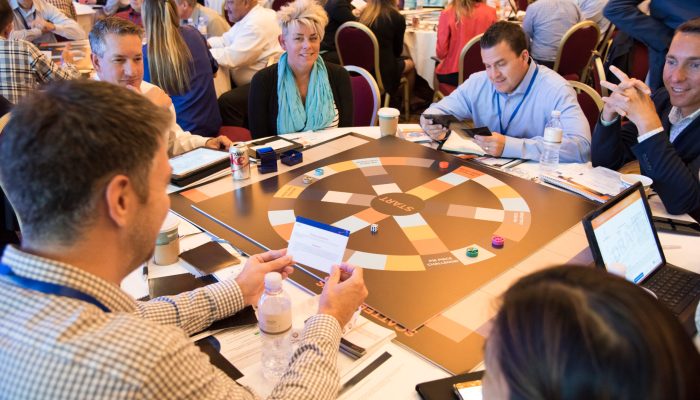
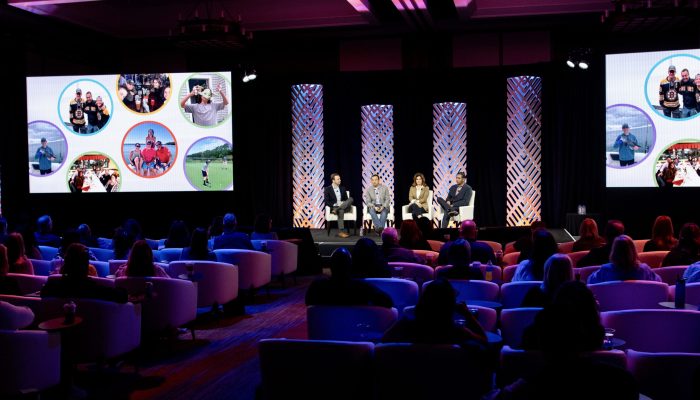
For experiential marketing storytelling to be effective, every element of the experience should support the same narrative. Stage design, presentations, videos, speaker preparation, audience interaction, and digital components all contribute to how the story is received.
The result is a more connected experience where creative decisions support business objectives rather than simply adding visual impact.
Using Storytelling to Strengthen Product Launches and Brand Experiences
Product launches require more than introducing features and specifications. Successful launches help audiences understand the significance of what is being introduced and why it matters in a broader context.
A storytelling approach allows organizations to build a stronger connection between the product, the audience, and the purpose behind the launch. Instead of beginning with technical details, the experience can begin with the challenge the product addresses and the change it enables.
This structure helps audiences follow the journey from problem to solution. It also creates opportunities for more engaging moments, including demonstrations, interactive experiences, customer perspectives, and conversations that reinforce the central message.
Creating memorable brand experiences depends on consistency. When the story told on stage matches the visual environment, attendee interactions, and follow-up communications, audiences receive a clearer and more unified message.
For organizations planning launches or immersive experiences, storytelling provides a framework for making complex ideas easier to understand and more relevant to the people experiencing them.
Applying Storytelling Principles to Training and Learning Experiences
Learning experiences are most effective when participants can connect new information to real situations. Training programs that rely only on information delivery may struggle to create lasting engagement, especially when learners need to apply concepts after the session.
Learning design can benefit from storytelling because narratives help organize knowledge around challenges, decisions, and outcomes. Instead of presenting concepts as isolated topics, training experiences can guide participants through realistic scenarios that encourage reflection and action.
For example, a leadership development program might use workplace situations to help participants explore decision-making. A sales training experience might connect product knowledge to customer conversations. In both cases, storytelling creates context that helps learners understand how information applies in practice.
DEVLINHAIR Production & Learning approaches experience design with this connection between strategy, creativity, and execution in mind. This approach supports action-driven meetings, live events, and training experiences designed to help audiences engage with important messages.
Building an Audience Engagement Strategy Through Story
A successful audience engagement strategy begins by understanding what the audience needs from the experience. Different groups may attend the same event with different expectations, levels of knowledge, and responsibilities.
Storytelling helps organizations create experiences that feel relevant because the message is shaped around the audience rather than only around the information being delivered. This audience-first approach can influence everything from speaker selection and content flow to interaction opportunities and post-event communication.
Interactive elements can also extend the story beyond the main event. Audience questions, discussions, digital engagement tools, and follow-up resources allow participants to become active contributors rather than passive recipients.
When audiences feel involved in the narrative, they are more likely to remember the experience and connect the message to future actions.
Creating Stronger Connections Through Purposeful Brand Storytelling
Brand storytelling is most effective when it serves a clear business purpose. It is not simply about making an event more creative or adding emotion to a presentation. It is about helping audiences understand, connect, and respond.
For corporate leaders, communications teams, and experience professionals, the opportunity is to design every interaction around a meaningful message. A strong story can help employees align around change, customers understand value, and participants engage more deeply with an experience.
As organizations continue to invest in meetings, launches, training programs, and live experiences, storytelling remains a practical way to create clarity and connection. When the message has purpose and the experience supports that message, audiences are more likely to remember what they learned and why it mattered.
Frequently Asked Questions
How does brand storytelling improve audience engagement in corporate events?
Brand storytelling improves audience engagement by helping people connect with a message through purpose, context, and meaning. In corporate meetings, live events, and product launches, a strong narrative helps attendees understand why the message matters and encourages deeper involvement.
What role does brand storytelling play in creating memorable brand experiences?
Brand storytelling helps create memorable brand experiences by connecting event elements, presentations, and audience interactions around a consistent message. This approach allows organizations to make complex ideas easier to understand and build stronger emotional connections with audiences.
How can storytelling be used in corporate training experiences and learning strategy?
Storytelling can strengthen corporate training experiences by organizing information around realistic challenges, decisions, and outcomes. A narrative-based learning strategy helps participants connect new knowledge to practical situations and improves audience engagement during training programs.
Disclaimer: The above helpful resources content contains general insights and perspectives for informational purposes only. The information provided is for general knowledge and does not constitute professional advice.
You may also be interested in: Why Hybrid Capabilities Matter for Modern Corporate Meetings
When your most important meeting, launch, summit, or training experience needs to move people, every detail matters. Strategy guides the work. Creativity shapes the story. Precision brings it to life. DEVLINHAIR Production & Learning designs and produces action-driven meetings, live events, and training experiences that move audiences. From our New York City studio, DEVLINHAIR helps organizations bring complex ideas, leadership priorities, and learning moments to life with clarity, purpose, and production precision. Ready to create a hybrid experience your audience can follow, feel, and act on? Let’s talk.
Powered by flareAI.co