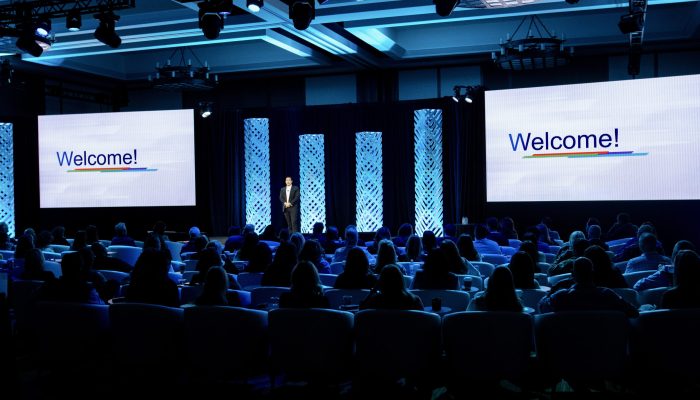
When a company schedules a leadership summit, product launch, or executive training program, the goal rarely stops at simply filling a calendar. The real pressure comes from making sure every attendee leaves with the message intact, connected to their own role, and ready to take action. In the hybrid world, this challenge has grown sharper because participants now join from multiple locations, multiple devices, and different time zones. What once felt like an afterthought adding a few virtual seats has become the deciding factor in whether an event lands its intended impact.
When your most important meeting, launch, summit, or training experience needs to move people, every detail matters. Strategy guides the work. Creativity shapes the story. Precision brings it to life. DEVLINHAIR Production & Learning designs and produces action-driven meetings, live events, and training experiences that move audiences. From our New York City studio, DEVLINHAIR helps organizations bring complex ideas, leadership priorities, and learning moments to life with clarity, purpose, and production precision. Ready to create a hybrid experience your audience can follow, feel, and act on? Let’s talk.
Why Hybrid Event Production Has Become Essential for Stronger Engagement
After the rapid rise of hybrid events, the question no longer centers on whether hybrid belongs in corporate events. Instead, the focus has shifted to how production teams design it to deliver measurable value for both in-person and remote audiences. The difference lies in treating each channel as its own engagement category rather than treating one as a secondary add-on.
A significant shift is underway in how event professionals and brand marketers think about the relationship between digital and in-person experiences. For years, virtual participation was positioned as a substitute for attending an event in person a compromise for those who could not travel or afford registration. That framing is quickly becoming outdated as senior agency executives across experiential, B2B, and brand events increasingly describe digital event experiences as a distinct category in their own right.
These experiences now deliver measurable engagement metrics that can rival and sometimes exceed in-person formats when designed intentionally. Retention rates in well-produced digital programs remain notably high, with participants staying engaged throughout full sessions and actively interacting with content. This shift has prompted the industry to rethink how success is defined, moving toward separate frameworks for virtual and in-person audiences rather than treating one as secondary. Generational expectations are also influencing this evolution, as younger participants increasingly expect seamless digital-first participation that feels fully integrated rather than supplemental.
This evolution reinforces the need for intentional hybrid design that treats each audience with equal strategic importance, shaping how organizations structure engagement, interaction, and long-term audience relationships. Learn more about this shift in how digital and in-person event experiences are evolving as separate engagement categories. Forward-thinking producers recognize that younger participants, in particular, expect seamless access regardless of location. They are not simply checking boxes; they are actively participating, interacting, and sharing insights. This generational shift has forced event teams to rethink success metrics. It is no longer enough to count total registrations. Instead, the emphasis has moved to depth of engagement how long people stay, how they interact, and whether the experience reinforces the core message.
One clear example of this evolution appears in recent industry conversations among senior event professionals. They describe digital participation as a distinct category that can deliver engagement metrics that rival or exceed in-person results when designed with the right production strategy. Retention rates in well-produced digital experiences remain remarkably high, with many participants staying fully engaged for the full length of programs and interacting throughout.
Senior agency executives working across experiential, B2B, and brand events now describe digital event experiences as a distinct category in their own right, one that delivers measurable engagement metrics that rival and sometimes exceed what in-person formats can track. This has prompted a rethinking of how hybrid event success is defined and measured rather than comparing virtual attendance unfavorably to in-person numbers, the most progressive production teams are developing separate success frameworks for each audience.
This approach has important implications for corporate communications leaders. When the right hybrid production is in place, teams can align distributed groups around strategic priorities, improve message retention, and create lasting connections that extend well beyond the event date.
The Strategic Role of Hybrid Production in Audience Engagement
Hybrid production is not about bolting technology onto an otherwise traditional event. It is a deliberate strategy that treats every participant whether they are physically present or joining remotely as part of a unified experience. The production team must design flows, content, and interactions so that both groups feel equally valued and informed.
Leaders in corporate meetings and training programs are beginning to see the difference clearly. In-person participants benefit from face-to-face connection and immediate feedback. Remote participants gain access to the same depth of content and interactive elements, but through polished digital channels. When production teams align these two worlds, the entire audience leaves with a clearer understanding of the objectives and a stronger sense of ownership over the outcomes.
The most effective hybrid programs use this dual-channel design to drive deeper message alignment. Complex ideas become tangible. Training concepts move from abstract to actionable. Product launches turn into shared experiences rather than one-sided presentations. In each case, the production strategy becomes the bridge between information and impact.
Key Ways Hybrid Capabilities Strengthen Engagement and Learning
Modern hybrid production relies on tools that keep everyone moving at the same pace. Live polling, synchronized slides, and breakout sessions work identically for both groups. The result is consistent participation rather than the old pattern where remote attendees sometimes feel like spectators. As hybrid event production has matured, the industry conversation has shifted from whether engagement should be measured to how it should be measured with greater precision and purpose. The most forward-thinking event teams are moving away from vanity metrics like total registrations and toward engagement quality indicators that reflect real participation depth. On-site engagement has become one of the most important success measures, alongside qualified lead generation, reflecting a broader evolution in how return on investment is demonstrated.
At the same time, AI-powered tools are increasingly being used to analyze attention patterns and emotional sentiment in real time during sessions and keynotes, giving production teams insights that were previously inaccessible. Virtual attendance rates, session completion, chat activity, and polling participation are now key benchmarks for evaluating remote audience effectiveness. Importantly, this data is not only used for reporting but also for iterative improvement helping teams refine session length, adjust content formats, and redesign digital touchpoints between events. This continuous feedback loop allows hybrid strategies to evolve over time, improving both audience experience and overall program performance. For a deeper look at this shift, see measuring hybrid event engagement and ROI in the AI era. Event teams are using AI-powered analysis to track attention and emotional sentiment in real time during sessions and keynotes, giving production teams data they previously had no way to access.
Personalization That Works for Distributed Teams
One of the biggest advantages of strong hybrid design is the ability to tailor experiences without losing scale. Generative tools can analyze past event data and attendee preferences to suggest relevant content or create personalized follow-up materials. The same level of customization that once required manual effort can now be delivered consistently across thousands of participants.
Training experiences especially benefit from this approach. Instead of a one-size-fits-all session, producers can deliver content that speaks directly to each attendee’s role, background, and learning goals. The result is higher retention and more meaningful take-aways.
Production Considerations That Separate Successful Hybrid Programs From Average Ones
The difference between a hybrid event that feels equal and one that leaves remote attendees feeling disconnected usually comes down to three production decisions made early in the planning process.
First, the team must define success for each audience separately. In-person participants may prioritize networking and visibility. Remote participants may focus on content depth, interaction quality, and ease of access. When these goals are aligned from the start, the production strategy can support both without compromise.
Second, the production partner should help map the full attendee journey, including the moments before, during, and after the event. Post-event follow-up becomes far more powerful when the same production systems that ran the event can also deliver personalized communications and resources.
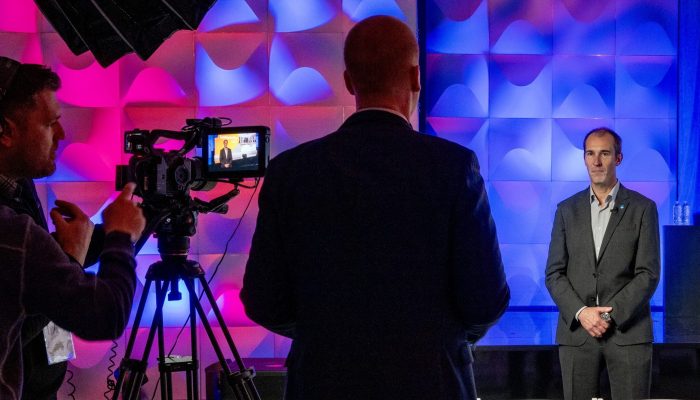
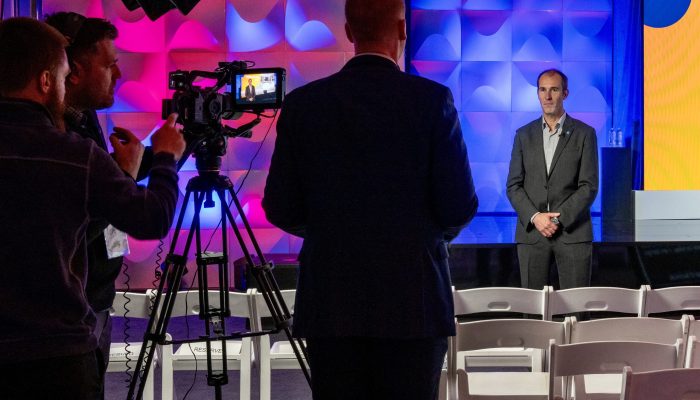
Third, the creative and technical teams must work together to ensure every element lighting, audio, camera angles, and platform integration supports the message rather than distracting from it. Precision in execution is what turns good hybrid production into unforgettable experiences.
How Hybrid Production Will Shape Corporate Experiences
As organizations continue to refine their strategies, hybrid capabilities will move from a necessary convenience to a core competitive advantage. The teams that master this discipline will be the ones whose events drive lasting business impact stronger alignment, deeper learning, and more memorable moments.
DEVLINHAIR Production & Learning designs and produces action-driven meetings, live events, and training experiences that move audiences. Strategy guides the work. Creativity shapes the story. Precision brings it to life. That approach helps organizations design and produce hybrid programs that deliver measurable engagement and lasting value.
The organizations that treat hybrid production as a strategic priority are already seeing the difference in how their audiences participate, retain messages, and return for future initiatives. The question moving forward is no longer whether hybrid belongs in the corporate event mix. The question is how well the production team can make every participant feel fully included and fully engaged.
Frequently Asked Questions
What is hybrid event production and how does it improve audience engagement?
Hybrid event production is a strategic approach that combines in-person and virtual experiences into a unified event designed for both audiences. It improves audience engagement by ensuring remote and on-site participants receive equal access to content, interaction, and messaging. When designed effectively, it increases message retention and participation by making the experience more interactive and inclusive across channels.
How do hybrid events increase engagement for both in-person and remote attendees?
Hybrid events increase engagement by using real-time interaction tools such as live polling, synchronized content, and breakout sessions that connect both audiences. This ensures remote attendees are not passive viewers but active participants alongside in-person guests. The result is a more cohesive experience that strengthens collaboration, learning outcomes, and audience involvement across corporate meetings, training sessions, and product launches.
What metrics are used to measure hybrid event engagement and success?
Hybrid event success is measured using both traditional and digital engagement metrics such as attendance, session completion rates, interaction levels, and content retention. Organizers also analyze chat activity, polling participation, and emotional or attention-based insights using digital and AI-powered tools. These metrics help production teams improve future corporate events, training experiences, and hybrid programs by refining content and delivery strategies.
Disclaimer: The above helpful resources content contains general insights and perspectives for informational purposes only. The information provided is for general knowledge and does not constitute professional advice.
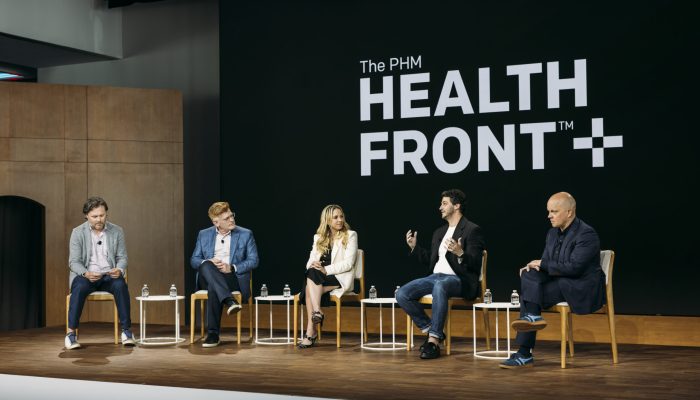
You may also be interested in: PHM HealthFront 2024
When your most important meeting, launch, summit, or training experience needs to move people, every detail matters. Strategy guides the work. Creativity shapes the story. Precision brings it to life. DEVLINHAIR Production & Learning designs and produces action-driven meetings, live events, and training experiences that move audiences. From our New York City studio, DEVLINHAIR helps organizations bring complex ideas, leadership priorities, and learning moments to life with clarity, purpose, and production precision. Ready to create a hybrid experience your audience can follow, feel, and act on? Let’s talk.
Powered by flareAI.co