When a company brings people together for a leadership summit, product launch, or training program, the goal is rarely just to share information. The real challenge is helping people understand the message, connect it to their role, and leave ready to act. Choosing between live events and virtual events is one of the first decisions that shapes whether that outcome is possible. The right format depends on audience needs, relationship goals, accessibility requirements, and the level of interaction required to move people from awareness to action.
When your most important meeting, launch, summit, or training experience needs to move people, every detail matters. Strategy guides the work. Creativity shapes the story. Precision brings it to life. DEVLINHAIR Production & Learning designs and produces action-driven meetings, live events, and training experiences that move audiences. From our New York City studio, DEVLINHAIR helps organizations bring complex ideas, leadership priorities, and learning moments to life with clarity, purpose, and production precision. Ready to create a hybrid experience your audience can follow, feel, and act on? Let’s talk.
The Distinct Advantages of Live Events
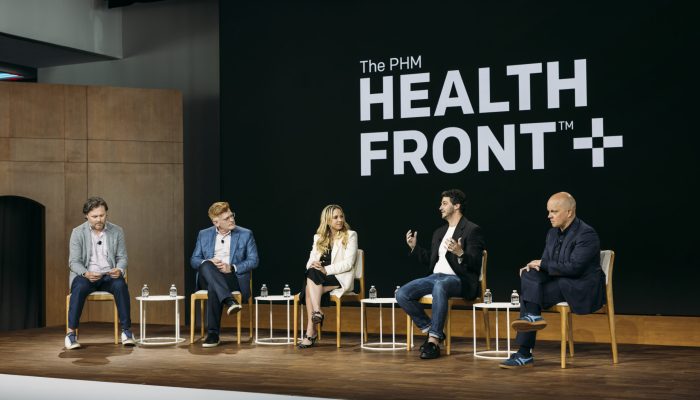
Live events create conditions that are difficult to replicate through a screen. Shared physical space supports spontaneous conversation, informal networking, and the kind of presence that helps complex messages land with greater weight. When leaders gather face-to-face, body language, energy, and unplanned side discussions often reinforce the formal content in ways that digital channels struggle to match.
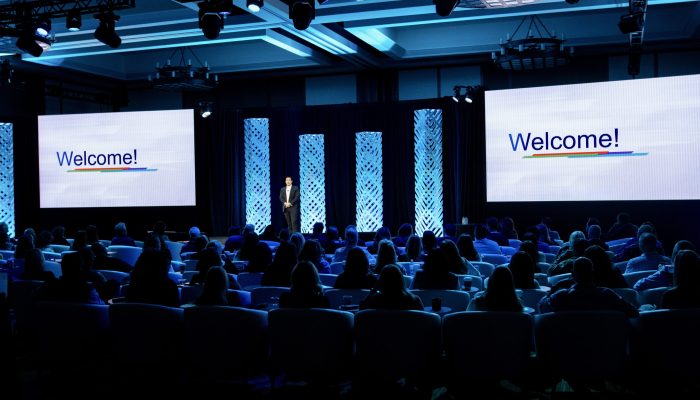
For product launches and leadership summits, the ability to experience something directly—whether a demonstration, a staged reveal, or a facilitated workshop—can make the difference between intellectual understanding and genuine conviction. Teams leave with shared reference points and a stronger sense of collective commitment. Production teams can also control the environment more tightly: lighting, pacing, transitions, and spatial design all work together to support the narrative.
These strengths matter most when relationship-building and memorable moments are central to the business objective. Live formats remain especially effective for high-stakes internal alignment sessions, executive retreats, and customer experiences where the quality of personal connection directly influences trust and follow-through.
Where Virtual Events Excel
Virtual events remove geographic barriers and expand reach in ways live gatherings cannot. Participants who would otherwise be excluded by travel cost, time zones, or scheduling constraints can still join. This accessibility supports broader education programs, company-wide communications, and external webinars where the priority is consistent message delivery to a distributed audience.
Well-designed virtual formats also allow for structured interaction through polls, breakout rooms, chat, and recorded content that participants can revisit. For training experiences focused on knowledge transfer and measurement, these tools can strengthen retention and provide clear data on engagement. The reduced logistical footprint often means faster planning cycles and more flexible repetition of content across multiple audiences.
Virtual events work best when the primary need is scale, convenience, and content consistency rather than deep interpersonal bonding. They give organizations a practical way to keep learning and communication continuous without requiring every participant to travel.
Moving Beyond an Either-or Decision
Organizations evaluating live events versus virtual events are increasingly finding that the decision is not always binary. A more effective approach is to understand how different event formats support different business goals, audience expectations, and available resources. Hybrid event formats have become an important option because they combine the relationship-building power of in-person gatherings with the accessibility and reach of digital participation.
For companies planning conferences, employee experiences, customer programs, or educational sessions, hybrid approaches create opportunities to expand attendance beyond geographic limitations while still preserving valuable face-to-face connections. Success requires more than adding a livestream to a live event. Teams need to consider how virtual attendees will interact, how content will be delivered, and how both audiences can feel included throughout the experience.
Different hybrid models can be adapted based on organizational priorities, from simple streamed sessions to more immersive experiences with shared networking, engagement tools, and synchronized programming. This flexibility allows organizations to choose the right balance between live and virtual elements instead of relying on a single format for every audience.
Designing Experiences That Serve Both Audiences
Live events remain valuable because they create opportunities for personal connection, networking, shared experiences, and memorable brand interactions, but virtual participation can significantly expand the reach and accessibility of those experiences. Modern organizations are using hybrid event strategies to serve multiple audiences at the same time, recognizing that in-person and online attendees often have different expectations and engagement behaviors.
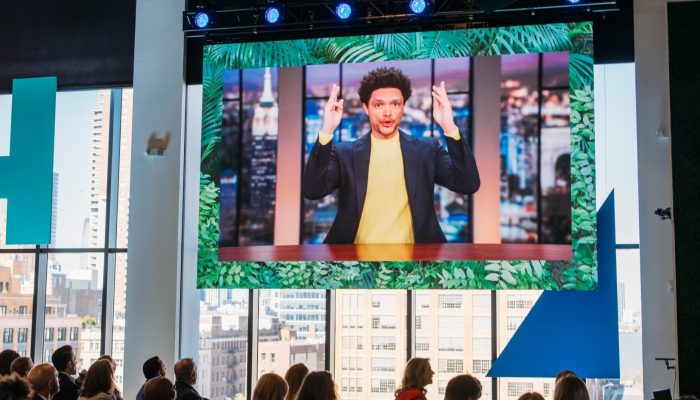
A strong hybrid event does not treat virtual attendees as passive viewers. Instead, it creates intentional digital experiences that provide meaningful access to content, interaction, and community. Examples from large-scale conferences demonstrate how organizations can use technology to connect remote audiences with live programming while also creating exclusive experiences for people attending onsite. This approach allows businesses to increase participation, accommodate travel limitations, and provide more flexible options for customers, employees, and partners.
Choosing between a fully live event, a fully virtual event, or a hybrid model depends on what an organization wants to accomplish. Live events may be ideal when relationship-building and immersive experiences are the priority, while virtual events may be better suited for broad education, convenience, and global accessibility. Hybrid events reaching broader audiences can bridge those needs by combining physical presence with digital reach.
Practical Criteria for Choosing the Right Format
Decision-makers can evaluate formats against a short set of practical questions. What level of interaction is required for the message to stick? How important is personal relationship-building relative to broad message consistency? What portion of the audience faces genuine barriers to travel? How will success be measured by depth of connection, by reach and completion rates, or by a combination of both?
Budget and production complexity also play a role. Live events demand precise coordination of space, staging, and onsite logistics. Virtual events require reliable technology platforms, content design suited to the screen, and facilitation that keeps remote participants active. Hybrid work adds the need to design parallel experiences that feel intentional rather than secondary.
After the rapid rise of hybrid events in 2022 and 2023, the question is no longer whether hybrid belongs in the corporate event mix. The question is how to design it well so that both audiences receive a coherent, purposeful experience. Leaders who treat format selection as a strategic decision rather than a default preference are better positioned to match the experience to the outcome they need.
How Production Strategy Shapes Outcomes
Format choice alone does not guarantee results. The quality of experience design, message clarity, and production execution determine whether participants leave aligned and ready to act. For DEVLINHAIR Production & Learning, effective experience design starts with a clear strategic foundation; that approach helps organizations design and produce action-driven meetings, live events, and training experiences that move audiences.
Whether the final format is live, virtual, or hybrid, the same principles apply: define the business objective first, design the audience journey around that objective, and execute with the precision required to keep every element supporting the core message. Production teams that understand both the strengths and limitations of each format can help leaders avoid the common trap of forcing a preferred channel onto a goal that would be better served by another.
The most useful conversations begin with outcomes rather than formats. Once the desired change in understanding, behavior, or alignment is clear, the right mix of live and virtual elements becomes easier to identify and produce.
Organizations that approach the live-versus-virtual decision with clarity about goals, audience constraints, and measurement priorities are better equipped to choose formats that deliver real results. Hybrid capabilities expand the options available, but they succeed only when both the in-person and digital experiences are designed with equal intentionality. The most effective path is rarely the simplest default. It is the one that aligns format, production quality, and audience needs around a single, purposeful outcome.
Frequently Asked Questions
What is the difference between live events and virtual events for corporate meetings and training experiences?
Live events provide in-person connection, networking, and immersive experiences that are valuable for leadership summits, product launches, and high-impact corporate meetings. Virtual events expand accessibility and allow organizations to deliver consistent training experiences and communications to distributed audiences. The right choice depends on audience needs, interaction goals, and desired outcomes.
Are hybrid events a better option than choosing between live events and virtual events?
Hybrid events can be the right solution when organizations need both personal connection and broader digital reach. They combine live event production with virtual participation to support audience engagement, flexible attendance, and shared learning experiences. A successful hybrid event requires intentional design for both in-person and online audiences.
How do organizations choose the right event format for audience engagement and business goals?
Organizations should choose a live, virtual, or hybrid event format based on their objectives, audience expectations, budget, and required level of interaction. Live events are often effective for relationship-building and memorable experiences, while virtual events support scale and convenience. Aligning event production strategy with learning goals and audience engagement needs helps create stronger outcomes.
Disclaimer: The above helpful resources content contains general insights and perspectives for informational purposes only. The information provided is for general knowledge and does not constitute professional advice.
You may also be interested in: Brands Build Community Through Targeted Experiential Initiatives
When your most important meeting, launch, summit, or training experience needs to move people, every detail matters. Strategy guides the work. Creativity shapes the story. Precision brings it to life. DEVLINHAIR Production & Learning designs and produces action-driven meetings, live events, and training experiences that move audiences. From our New York City studio, DEVLINHAIR helps organizations bring complex ideas, leadership priorities, and learning moments to life with clarity, purpose, and production precision. Ready to create a hybrid experience your audience can follow, feel, and act on? Let’s talk.
Powered by flareAI.co