Quick Listen:
When companies need to scale training programs, the goal is rarely just to deliver content. The real challenge is preserving message clarity and measurable outcomes while expanding reach across teams, locations, or formats without losing the human connection that makes learning stick.
Learning leaders in corporate America face this daily pressure. A successful program that works for 50 employees can quickly become unmanageable when the audience grows to 500 or more. Participants arrive from different departments, time zones, and skill levels. One-size-fits-all sessions stop delivering results. The question that follows is how to expand without sacrificing the engagement, retention, and behavioral change that justify the investment.
When your most important meeting, launch, summit, or training experience needs to move people, every detail matters. Strategy guides the work. Creativity shapes the story. Precision brings it to life. DEVLINHAIR Production & Learning designs and produces action-driven meetings, live events, and training experiences that move audiences. From our New York City studio, DEVLINHAIR helps organizations bring complex ideas, leadership priorities, and learning moments to life with clarity, purpose, and production precision. Ready to create a hybrid experience your audience can follow, feel, and act on? Let’s talk.
The Business Pressure Driving Program Scalability
Modern organizations need scalable training to keep up with rapid change. New products launch. Teams shift. Compliance rules update. Without a repeatable model, learning leaders risk creating the same high-cost, low-impact sessions again and again. The pressure is real: expand impact, control costs, and maintain quality across every delivery point.
Yet scaling is not just about adding more seats. It requires rethinking how participants interact with the material. Traditional classroom lectures work at small scale but break down when numbers grow. Leaders who succeed treat scalability as a strategic design choice from the beginning.
Why Hybrid Approaches Are No Longer Optional
Hybrid training programs have moved from a convenience feature to a core requirement. Participants want flexibility without sacrificing depth. A program that offers both live and recorded components can reach more people while allowing self-paced review. The trick is keeping the experience seamless so that attendance and completion rates stay high.
Building a Scalable Learning Strategy That Lasts
Effective scaling starts with a clear framework that defines what success looks like at every stage. Begin by mapping the learner journey from initial awareness through application on the job. This creates guardrails that prevent common pitfalls when delivery changes.
Next, establish consistent learning outcomes that travel with the program. These become the non-negotiable core no matter how many locations or formats are involved. The strategy also includes feedback loops so that real-time data from one delivery can improve the next.
Design for Retention Instead of Just Attendance
Most scaling efforts focus on headcount. Stronger programs focus on retention and application. One proven method involves turning passive sessions into active ones. Participants move through stations that require hands-on work, peer discussion, and immediate practice. These interactive elements help ideas stick far better than lectures alone.
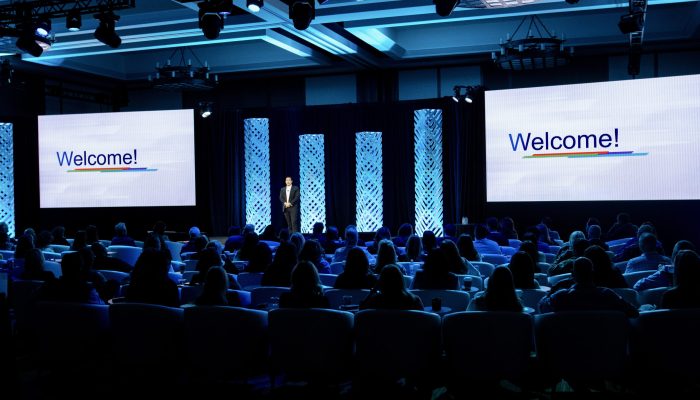
A standout example comes from a partnership between a major production agency and the Association for Talent Development, where a full-scale, hands-on learning experience was built directly inside an existing industry conference rather than launched as a standalone event. Roughly 150 attendees moved through a series of interactive stations, each tied to a specific lesson, from problem-solving exercises to game-show style activities, all designed around the principle that physical interaction strengthens retention far more than passive listening. What stands out for learning leaders is the approach to scale: instead of adding headcount or building an entirely new infrastructure, the team treated the host conference as a creative partner, aligning timelines and resources so the program could grow without disrupting existing programming.
Personalization technology was used to capture each participant’s goals and preferences ahead of time, allowing the experience to feel tailored even at volume. Just as important was how success was measured. Rather than relying solely on satisfaction scores, which were strong but considered insufficient on their own, organizers tracked whether attendees could actually apply what they learned once they returned to their own roles. For organizations weighing how to expand training without losing quality or intimacy, this model offers a clear lesson: scaling works best when it is built into existing structures, personalized at the individual level, and measured by behavior change rather than attendance numbers alone.
Scaling immersive training inside an existing conference demonstrates how organizations can expand learning programs without losing quality or intimacy. The approach highlights how complex training initiatives can be structured around shared learning goals while still allowing each city or audience group to experience the material in a way that reflects local context and participant behavior when adapted appropriately. Rather than relying on rigid replication, the model emphasizes adaptive delivery, where facilitators and production teams adjust pacing, layout, and interaction design based on real-time feedback.
This creates a more responsive learning environment that supports engagement at scale. The example also reinforces the importance of balancing structure with flexibility, showing that when learners are given more agency to explore content, retention and application often improve. For learning leaders, it illustrates a practical framework for scaling without flattening the experience, ensuring that core competencies remain intact while delivery evolves to meet the needs of diverse audiences.
Choosing Delivery Models That Match the Audience
Hybrid training programs offer the best of both worlds, but only when they are designed thoughtfully from the start. Leaders should evaluate three main options and mix them strategically. Instructor-led sessions provide real-time guidance and energy. Self-paced modules give participants control and flexibility. Blended elements combine both so that learners can move between formats based on their needs.
Recent examples show how multi-city models can maintain consistency while adapting to local context. In one high-profile technical training initiative, the same core learning goals were delivered across three different cities. Organizers gave participants more agency to explore at their own pace, which actually improved engagement and retention. They also refined the program between locations based on real attendee behavior, adjusting layout and pacing so people could move more naturally through the content. The result is a strong reminder that scaling training successfully is less about replicating a single format everywhere and more about protecting the underlying learning goals while adapting the delivery.
A multi-city model for scaling technical training demonstrates how organizations can expand learning programs across multiple locations without losing consistency in outcomes. The approach highlights how complex training initiatives can be structured around shared learning goals while still allowing each city or audience group to experience the material in a way that reflects local context and participant behavior. Rather than relying on rigid replication, the model emphasizes adaptive delivery, where facilitators and production teams adjust pacing, layout, and interaction design based on real-time feedback.
This creates a more responsive learning environment that supports engagement at scale. The example also reinforces the importance of balancing structure with flexibility, showing that when learners are given more agency to explore content, retention and application often improve. For learning leaders, it illustrates a practical framework for scaling without flattening the experience, ensuring that core competencies remain intact while delivery evolves to meet the needs of diverse audiences.
Overcoming the Top Scaling Challenges
Three obstacles appear repeatedly when programs expand. First, maintaining quality as headcount grows. Second, keeping content current in fast-moving fields. Third, ensuring every participant stays engaged regardless of delivery method.
The first two challenges often have technical solutions. A robust learning management system can handle large volumes while allowing easy updates. AI tools can help personalize content at scale without losing the human touch. The third challenge is addressed through thoughtful design. Interactive stations, peer collaboration areas, and multisensory environments turn training into something memorable rather than routine.
One particularly effective activation involves an immersive AI-driven experience where attendees answer prompts on a touchscreen. The system generates personalized imagery that projects on a large screen, creating a co-created environment. Participants step into the infinity-like structure and explore their own ideas in a layered, exploratory space. Sound design and spatial audio guide the journey, turning passive consumption into active discovery. This approach shows how technology can scale engagement without sacrificing the feel of a meaningful, human-led experience.
Measuring What Actually Changes After Training
Knowledge transfer is the ultimate test of any scaled program. Leaders who measure only attendance or satisfaction scores miss the point. Stronger measurement tracks whether participants can apply new skills on the job, improve performance metrics, or achieve business outcomes. Follow-up conversations, real-world implementation stories, and qualitative feedback often reveal more impact than traditional surveys.
Tracking transference helps refine future iterations. When teams see attendees replicating attendee journey mapping exercises or using ideas from immersive setups to reimagine their own spaces, the program moves from training into strategy. This kind of evidence keeps scaling efforts focused on results instead of convenience.
Putting Scalability Into Action at DEVLINHAIR Production &Amp;Amp; Learning
Strategy guides the work. Creativity shapes the story. Precision brings it to life. We design and produce action-driven meetings, live events, and training experiences that move audiences.
These principles apply directly to scaling efforts. When learning leaders partner with teams that bring production precision to every component, the result is a program that scales cleanly while delivering memorable, purposeful experiences. The focus stays on outcomes that matter: stronger alignment, clearer application, and lasting behavioral change.
Next Steps for Learning Leaders
Start by auditing your current program against the three scaling questions above. Identify where consistency is strong and where adaptation is needed. Then test one hybrid element or interactive station on a small group to gather early feedback. Refine based on real application data before expanding further. The organizations that treat scaling as a thoughtful design process, rather than a simple volume play, see the highest return on their training investment.
The path forward is clear. Scale with purpose. Measure with intention. And always keep the learner at the center of every decision.
Frequently Asked Questions
What Learning Leaders Should Consider Before Scaling Training Programs?
Before scaling training programs, learning leaders should focus on preserving message clarity and measurable outcomes while expanding reach across teams, locations, or formats without losing the human connection that makes learning stick. This involves rethinking participant interaction, establishing consistent learning outcomes, and incorporating feedback loops to improve each delivery.
How to Expand Corporate Training Without Losing Engagement and Retention?
To expand corporate training without losing engagement and retention, treat scalability as a strategic design choice from the beginning by mapping the learner journey and turning passive sessions into active ones with hands-on stations, peer discussion, and immediate practice. Hybrid approaches that blend live, recorded, and self-paced components can reach more people while allowing self-review, and measuring success through behavioral change rather than just attendance or satisfaction scores.
How Can Organizations Scale Immersive Training Experiences Like Those at Conferences?
Organizations can scale immersive training experiences by building them directly into existing industry conferences rather than launching standalone events, using interactive stations tied to specific lessons and personalization technology to tailor the experience at volume. This approach aligns resources and timelines with the host event, adjusts delivery based on real-time feedback, and tracks actual application on the job to ensure quality and intimacy are maintained at scale.
Disclaimer: The above helpful resources content contains general insights and perspectives for informational purposes only. The information provided is for general knowledge and does not constitute professional advice.
You may also be interested in: New Technologies Enhance Audience Retention at Corporate Summits
When your most important meeting, launch, summit, or training experience needs to move people, every detail matters. Strategy guides the work. Creativity shapes the story. Precision brings it to life. DEVLINHAIR Production & Learning designs and produces action-driven meetings, live events, and training experiences that move audiences. From our New York City studio, DEVLINHAIR helps organizations bring complex ideas, leadership priorities, and learning moments to life with clarity, purpose, and production precision. Ready to create a hybrid experience your audience can follow, feel, and act on? Let’s talk.
Powered by flareAI.co