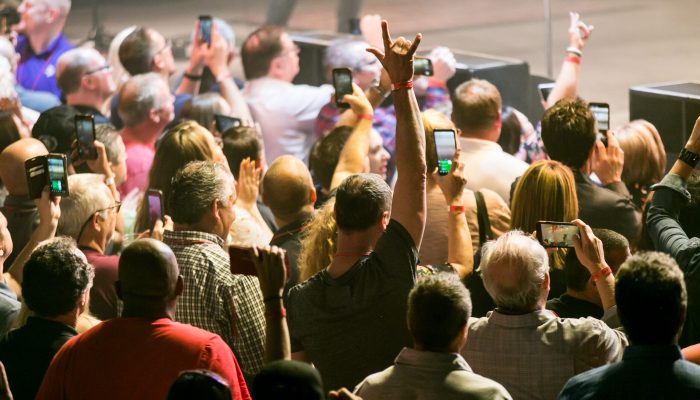
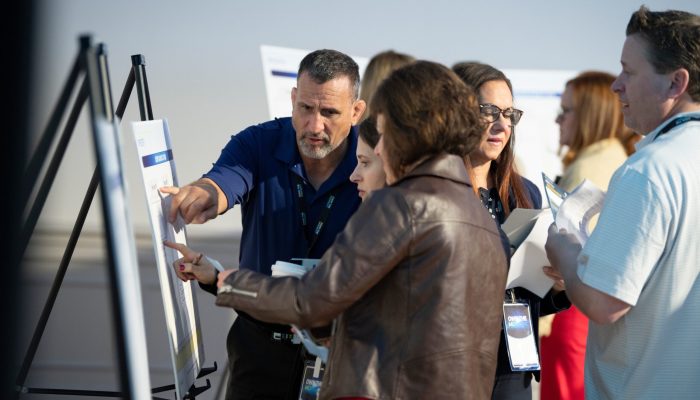
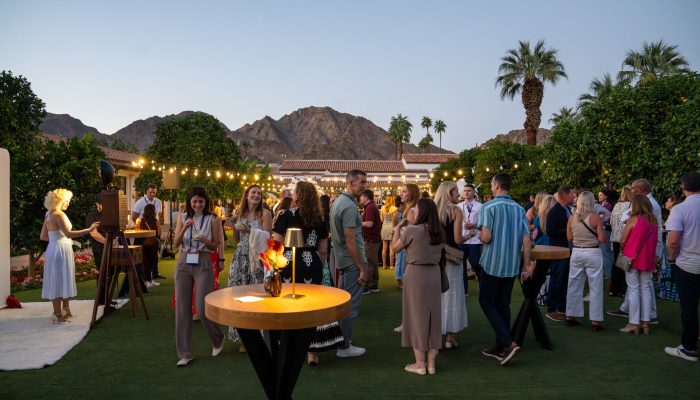
When a company brings leaders and teams together for a strategy update, product launch, or training program, the goal goes far beyond sharing information. The real challenge is helping people truly understand the message, connect it to their daily work, and feel motivated to act on it. Traditional presentation slides often fall short here, delivering facts without the emotional resonance or memorable context that drives lasting alignment.
When your most important meeting, launch, summit, or training experience needs to move people, every detail matters. Strategy guides the work. Creativity shapes the story. Precision brings it to life. DEVLINHAIR Production & Learning designs and produces action-driven meetings, live events, and training experiences that move audiences. From our New York City studio, DEVLINHAIR helps organizations bring complex ideas, leadership priorities, and learning moments to life with clarity, purpose, and production precision. Ready to create a hybrid experience your audience can follow, feel, and act on? Let’s talk.
The Limitations of Relying Solely on Slides
Slide decks have long been a staple in corporate communication strategies. They organize data, highlight key points, and provide a clear structure for speakers. Yet many organizations discover that information delivered this way frequently fails to stick. Attendees sit through dense bullet points and complex charts, only to leave with limited recall of the core messages or their personal relevance.
This gap matters particularly in high-stakes situations such as leadership summits, sales meetings, or change management initiatives. When audiences feel disengaged, important strategic shifts lose momentum. Training retention drops, product launches underperform, and internal buy-in remains superficial. Effective corporate presentations need to move beyond one-way information delivery toward experiences that foster genuine connection and understanding.
Corporate communications leaders increasingly recognize that audiences today expect more dynamic, relatable formats. Static slides struggle to compete with the interactive, story-rich content people encounter in their daily lives. This creates an opportunity to rethink how organizations design meetings, events, and learning experiences for greater impact.
The Power of Human-centered Storytelling
Corporate communication becomes far more effective when it transforms abstract ideas into human stories. Instead of relying on slides filled with data, thoughtful content, design, and production can create immersive environments that make messages feel real and relatable.
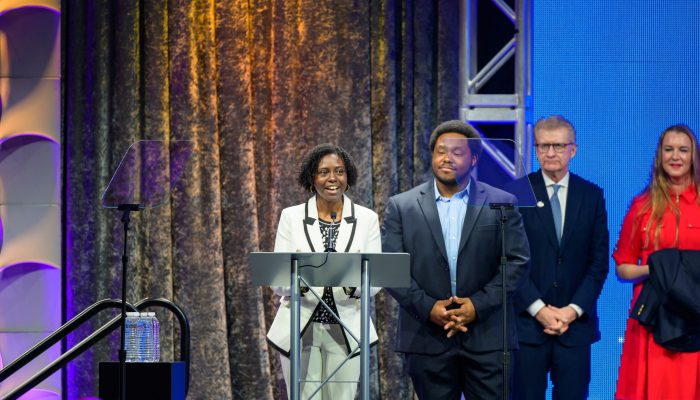
Corporate communication no longer relies on slides and bullet points to drive understanding and buy-in. Instead, thoughtful content, design, and production create immersive experiences that make abstract ideas feel real and relatable. In one recent corporate event in Los Angeles, a company formerly known as CoreLogic used its general session as a storytelling platform rather than a standard presentation.
The team partnered with Staging Solutions to craft a dynamic environment centered on an immersive LED canvas that evolved with each speaker. Familiar settings such as kitchens, living rooms, and porches shifted and scaled in response to the messages, tying technical messaging back to an emotional core about protecting the spaces where people live. Complex ideas became easier to absorb through visual terms that resonated naturally.
Attendees experienced a cohesive, immersive connection between the stage and the brand’s values. This approach shows that strong production does not need to be excessive. When story and design work together, a general session becomes more than a presentation.
For companies announcing strategy shifts, launching new products, or redefining identity, the key is clarity, familiar visuals to support abstract ideas, and refinement that centers on the audience. This method strengthens internal messaging, fosters deeper engagement among teams and stakeholders, and creates lasting impressions that slide-based formats often fail to achieve. The result is more effective communication that aligns minds, builds trust, and drives alignment around shared goals without overwhelming the audience.
Such methods strengthen message retention and emotional buy-in. When teams see strategic concepts visualized in human terms, they better grasp implications for their roles and the organization’s overall direction. This shift from presentation to experience supports deeper engagement and more effective knowledge transfer in both in-person and hybrid formats.
Designing Immersive Experiences That Drive Alignment
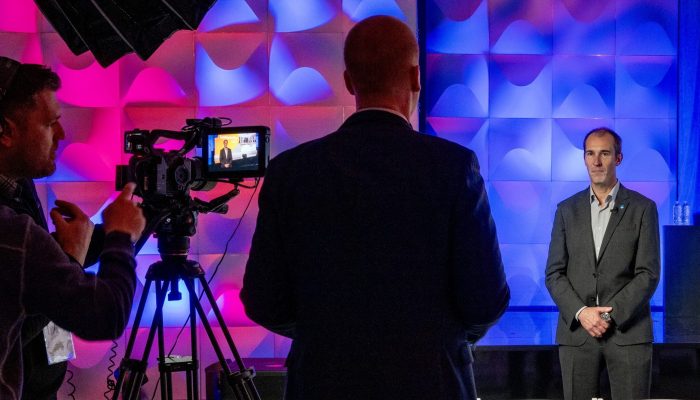
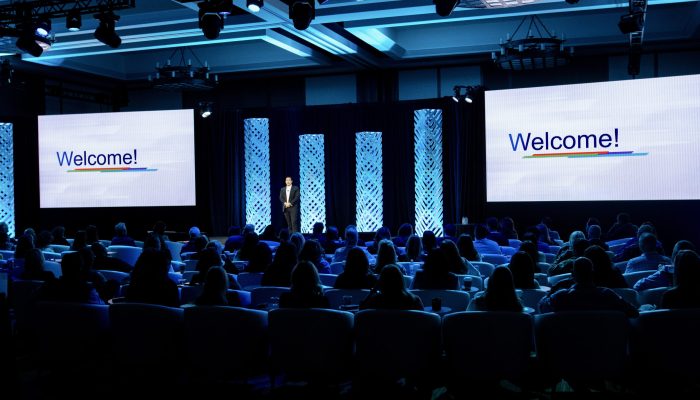
Immersive production elevates corporate communication by creating environments where audiences actively participate in the message rather than passively receive it. Live events and carefully produced meetings allow for real-time interaction, emotional connection, and shared context that slides alone cannot replicate.
Production precision plays a critical role here. Elements like lighting, spatial design, and integrated visuals work together to reinforce key themes throughout the experience. These details help transform standard corporate gatherings into memorable moments that align teams around common goals.
For training experiences and leadership programs, immersive design supports better outcomes by making learning more engaging and applicable. Participants leave not just informed but inspired, with clearer connections between corporate objectives and their individual contributions. This approach proves especially valuable for organizations rolling out new initiatives or navigating significant change.
Hybrid Capabilities Expand Reach and Inclusion
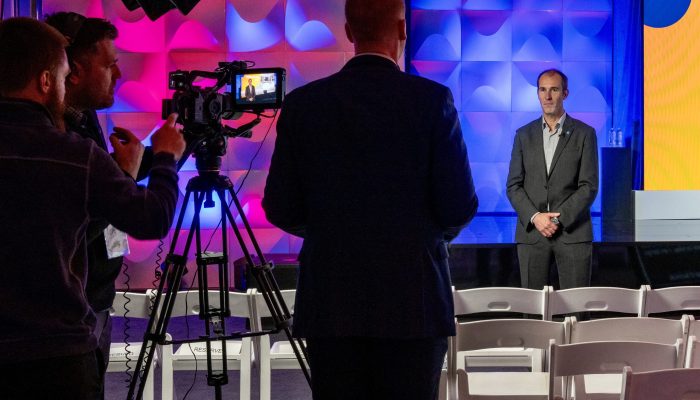
Modern corporate communication strategies must account for distributed teams and varied participation preferences. Hybrid event production combines the strengths of in-person connection with accessible virtual options, ensuring broader audiences can engage meaningfully.
Effective hybrid design goes beyond basic streaming. It requires thoughtful integration of technology, content adaptation, and production elements that maintain consistency and impact across formats. When executed well, hybrid capabilities allow remote participants to feel equally involved rather than like afterthoughts.
Organizations that invest in robust hybrid production see improved attendance, higher engagement levels, and stronger overall message alignment. This flexibility has become essential for global teams, cross-functional initiatives, and inclusive learning programs where physical presence is not always possible.
Practical Considerations for More Effective Communication
Leaders planning important corporate meetings or training experiences should evaluate several key factors. First, clarify the core objectives: Is the goal awareness, skill-building, behavioral change, or strategic alignment? The answer shapes the appropriate format and production approach.
Consider audience needs and preferences. What will help them connect with the content? How can the experience address different learning styles and engagement levels? Interactive elements, relatable storytelling, and purposeful design often outperform traditional methods in creating memorable impact.
Production strategy also matters. Partnering with experienced teams ensures technical elements support rather than distract from the message. From venue design to audiovisual integration and content flow, every detail contributes to the overall effectiveness of the communication effort.
Sustainability and Values in Corporate Experiences
Corporate events increasingly serve as platforms for demonstrating organizational values, including commitments to sustainability and social responsibility. These elements can strengthen communication when authentically integrated into the experience design.
Corporate events increasingly serve as platforms for sharing and reinforcing sustainability messaging that aligns with broader business values. Many companies embed environmental commitments into their corporate strategies, and events provide tangible opportunities to communicate these commitments to stakeholders, partners, and employees. One brand, Subaru, has long integrated sustainability into its operations and events, ensuring all single-use waste is diverted to alternative streams and remade into new products through partnerships with TerraCycle.
The brand’s WinterFest tour features partnerships with eco-friendly companies like Klean Kanteen and Leave No Trace, offering reusable items and promoting practices such as reducing waste and preserving natural spaces. This messaging extends to real-world impact, including community support at locations affected by climate events, such as the Sierra-at-tahoe Resort. The goal is to turn events into spaces where attendees learn, engage, and contribute to positive change.
Venues like Hilton and MGM are responding by offering carbon-neutral meeting options, sustainable procurement policies, and guides with practical ideas for menu selection, décor, signage, and programming. These efforts go beyond environment to encompass social and economic responsibility, creating events that reflect holistic corporate values. For internal communication, such approaches help employees understand how their company’s events contribute to larger goals, building pride and alignment. They also attract talent and partners who value brands committed to sustainability. As Gen Z and millennials drive consumer expectations, corporate events that clearly communicate sustainability efforts not only fulfill regulatory and ethical responsibilities but also strengthen reputation, foster loyalty, and differentiate organizations in competitive markets.
This integration enhances audience connection by showing how corporate messages extend beyond the event itself. Participants gain a clearer sense of the organization’s purpose and their role within it, supporting stronger long-term alignment and loyalty.
DEVLINHAIR’s Approach to Action-driven Communication
For DEVLINHAIR Production & Learning, effective experience design starts with a clear strategic foundation. Strategy guides the work. Creativity shapes the story. Precision brings it to life. We design and produce action-driven meetings, live events, and training experiences that move audiences.
By focusing on purposeful storytelling, immersive production, and hybrid capabilities, DH helps clients move beyond presentation slides toward communication that truly connects. The result is greater message retention, stronger team alignment, and more successful outcomes for critical business initiatives.
Whether planning a product launch, leadership summit, or comprehensive training program, the right production partnership can transform standard corporate communication into experiences people remember and act upon.
Corporate communication that prioritizes human connection, strategic design, and engaging delivery consistently outperforms traditional slide-based approaches. Organizations ready to elevate their internal and external messaging should consider how live, hybrid, and immersive production can support their most important objectives. The difference lies not just in sharing information, but in creating experiences that inspire understanding and action.
Frequently Asked Questions
Why do corporate meetings need more than presentation slides to engage audiences?
Corporate meetings need more than slides because effective communication requires storytelling, audience connection, and experiences that help teams understand and act on key messages. Event production, immersive design, and purposeful content can transform complex strategies into memorable experiences that improve audience engagement and alignment.
How can immersive event production improve corporate communication and training experiences?
Immersive event production improves corporate communication and training experiences by turning abstract ideas into visual, interactive, and relatable moments. By combining content strategy, production design, and learning-focused elements, organizations can create stronger knowledge retention and more meaningful connections for employees and stakeholders.
Why are hybrid events important for corporate training and internal communication?
Hybrid events are important for corporate training and internal communication because they allow distributed teams to participate in consistent, engaging experiences regardless of location. A well-designed hybrid event strategy combines technology, content adaptation, and production expertise to support inclusion, learning outcomes, and stronger organizational alignment.
Disclaimer: The above helpful resources content contains general insights and perspectives for informational purposes only. The information provided is for general knowledge and does not constitute professional advice.
You may also be interested in: Why Hybrid Event Design Requires Production-first Planning
When your most important meeting, launch, summit, or training experience needs to move people, every detail matters. Strategy guides the work. Creativity shapes the story. Precision brings it to life. DEVLINHAIR Production & Learning designs and produces action-driven meetings, live events, and training experiences that move audiences. From our New York City studio, DEVLINHAIR helps organizations bring complex ideas, leadership priorities, and learning moments to life with clarity, purpose, and production precision. Ready to create a hybrid experience your audience can follow, feel, and act on? Let’s talk.
Powered by flareAI.co