Quick Listen:
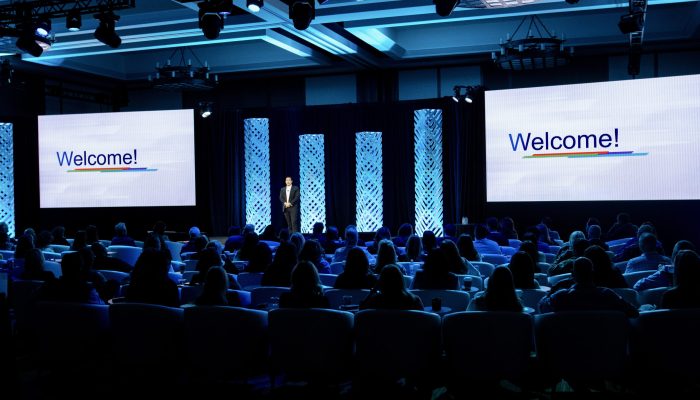
When organizations bring hybrid meetings together, the goal is no longer just to connect people. Corporate leaders who bring hybrid meetings together often face a tension that feels familiar in any high-stakes gathering: how do you keep the in-room energy high while ensuring remote participants stay fully aligned, engaged, and able to contribute at the same level? The challenge has moved well beyond the initial pandemic adaptations. Today, the focus has shifted to refining the experience so every voice carries equal weight and every interaction drives measurable business results.
This refinement matters because hybrid formats now sit at the center of how organizations align teams, accelerate product launches, and run effective training experiences. When designed with purpose, hybrid meeting experiences can turn a single session into a platform for deeper collaboration, stronger retention of key messages, and clearer accountability for distributed teams.
When your most important meeting, launch, summit, or training experience needs to move people, every detail matters. Strategy guides the work. Creativity shapes the story. Precision brings it to life. DEVLINHAIR Production & Learning designs and produces action-driven meetings, live events, and training experiences that move audiences. From our New York City studio, DEVLINHAIR helps organizations bring complex ideas, leadership priorities, and learning moments to life with clarity, purpose, and production precision. Ready to create a hybrid experience your audience can follow, feel, and act on? Let’s talk.
The Business Moment That Requires Refinement Today
Many organizations still run hybrid corporate meetings that began as a necessity during the pandemic. Yet the same format that once solved logistical hurdles now demands more intentional design if it is to deliver the same business impact it promised. In-room participants expect the immediacy and spontaneity of face-to-face interaction, while remote attendees need seamless participation that does not feel like an afterthought.
The result is a growing recognition that hybrid meeting strategies must evolve beyond simply adding a virtual line. Without careful refinement, even well-intentioned hybrid events risk uneven engagement, fragmented learning outcomes, and diluted audience connection. Leaders who recognize this shift are treating hybrid formats as a core strategic asset rather than a temporary solution.
Why the In-room/Remote Balance Still Matters
Research from Event Marketer highlights that 60 percent of organizations that host a mix of in-person, virtual, and hybrid events report in-person experiences as the most effective for generating revenue. This finding underscores why refining hybrid meeting experiences matters: the in-room component retains its unique power to spark energy and close deals, while remote participants bring access, diversity of voices, and extended reach.
Yet that power must be preserved through thoughtful design. When hybrid meeting experiences are refined well, organizations see stronger overall outcomes in alignment, sales pipeline growth, and training retention than they do from either format alone.
Redefining the Role of Scale in Hybrid Meeting Design
One important shift in hybrid meeting design is a greater focus on the quality of participation rather than audience size alone. Instead of treating attendance volume as the primary measure of success, organizations can design experiences around the people who need to be involved, the conversations that need to happen, and the outcomes the meeting is intended to support.
This approach can influence everything from session structure to audience segmentation. Smaller discussion groups, focused breakout sessions, facilitated conversations, and purpose-built experiences can give participants more opportunities to contribute, ask questions, and engage directly with relevant people and ideas.
For hybrid meetings, this becomes especially important because in-room and remote audiences may have different participation needs. Rather than delivering the same experience to everyone in the same way, organizations can create formats that give each audience a clear role and meaningful opportunities to interact.
Redefining scale does not necessarily mean making meetings smaller. It means being more intentional about how audiences are organized and how participation is designed. A large meeting may still be appropriate for broad communication, while smaller sessions can support deeper discussion, collaboration, learning, or decision-making.
The key takeaway is that scale alone does not determine the value of a hybrid meeting. Thoughtful audience segmentation, purposeful interaction design, and clear business objectives can help organizations create experiences that are more relevant and useful for both in-room and remote participants.
Refining Hybrid Meeting Experiences Through Intentional Formats
Refining hybrid meeting experiences also means rethinking how content flows and how conversations happen. Organizations are moving from passive consumption of keynotes to active participation in roundtables, breakouts, and collaborative sessions that span both physical and virtual spaces.
This approach allows remote participants to join in real time, share insights, and influence outcomes without feeling isolated. In hybrid training experiences, for instance, the same structure helps ensure that distributed learners receive the same level of guidance and accountability as those attending in person.
The refinement process begins with understanding the audience. Leaders ask: Who is coming for what reason? What specific outcomes do we want them to achieve? Once those questions are answered, the design follows. Hybrid meeting strategies become tools for deeper engagement rather than simply extending reach.
Applying Hybrid-first Design to Corporate Meetings, Launches, and Training
The principles that work for flagship events translate directly to other high-stakes gatherings. When corporate meetings adopt hybrid-first design, organizations gain the ability to serve multiple audiences in one session, whether that means executives in the room with virtual stakeholders, or training cohorts that include both on-site and remote learners.
Product launches benefit equally. Hybrid meeting experiences can deliver the excitement and energy of an in-person gathering while extending the audience to global partners and customers who might not otherwise attend. The key is to make the format feel purposeful from the first slide.
Training experiences see similar gains. When refined properly, hybrid formats support consistent delivery of complex concepts, maintain learner focus, and provide the flexibility that modern workforces expect. The result is stronger knowledge retention and clearer application of what was learned.
Why Hybrid Capabilities Now Deliver More Than Ever
After the rapid rise of hybrid events, the question is no longer simply whether hybrid belongs in the corporate event mix. The greater challenge is designing hybrid experiences that serve both in-room and remote participants with equal purpose and attention.
Organizations are increasingly approaching meetings and events as strategic business experiences rather than standalone communication moments. That shift places greater emphasis on how each element of a hybrid program supports specific goals, whether those involve leadership alignment, product communication, collaboration, training, or audience engagement.
Effective hybrid design goes beyond providing remote access to an in-person meeting. It considers how participants will interact, how information will be shared across both environments, and how each audience can contribute meaningfully throughout the experience.
This makes hybrid capabilities most valuable when they are integrated into the meeting strategy from the beginning rather than added as a secondary layer. Clear objectives, thoughtful facilitation, purposeful interaction, and consistent experiences across locations can help organizations create meetings that work for distributed audiences without losing the energy and connection of being together in person.
Practical Steps for Refining Your Own Hybrid Meeting Experiences
Organizations ready to refine their hybrid meeting experiences should begin by auditing current programs. Map every element to the intended business outcome, then test small changes in pilot sessions. Focus on interaction design, not just technology.
Invest in tools and facilitators who understand both formats. Build in structured moments for cross-audience engagement. Track engagement beyond attendance, using metrics that matter to leadership: alignment scores, knowledge application, and follow-through on action items.
The organizations making the biggest progress treat hybrid as a long-term meeting and learning format rather than an experiment. They measure what works, double down on the strengths, and continuously refine the experience based on real participant feedback.
What Refined Hybrid Experiences Enable
As organizations continue refining hybrid meeting experiences, the focus will remain on creating moments that feel equally rich for everyone involved. The technology will evolve, but the core principles of purposeful design, strong facilitation, and audience-centered outcomes will stay constant.
Teams that embrace this refinement will find hybrid formats becoming more powerful drivers of business growth, team alignment, and learning than either format could achieve alone. The next generation of hybrid corporate meetings will not just connect people; they will move them to act.
Frequently Asked Questions
What does it mean to refine hybrid meeting experiences for corporate events?
It means intentionally redesigning hybrid meetings so in-person and remote participants have equal access, engagement, and impact. Instead of simply streaming content, organizations focus on structured interaction, clear outcomes, and stronger audience alignment. In event production and training experiences, this approach ensures every session drives measurable business results rather than passive participation.
How can organizations improve engagement in hybrid corporate meetings?
Organizations improve engagement by designing hybrid meetings around interaction rather than presentation. This includes using facilitated discussions, breakout sessions, roundtables, and tools that support real-time participation for remote and in-room audiences. Strong hybrid event production also tracks engagement metrics beyond attendance, helping teams refine audience engagement and learning outcomes over time.
Why are hybrid capabilities important for meetings, launches, and training programs?
Hybrid capabilities are important because they expand reach while maintaining the impact of in-person experiences. They allow corporate meetings, product launches, and training programs to serve distributed teams without losing alignment or focus. When designed well, hybrid formats improve knowledge retention, strengthen communication, and support more consistent business outcomes across audiences.
Disclaimer: The above helpful resources content contains general insights and perspectives for informational purposes only. The information provided is for general knowledge and does not constitute professional advice.
You may also be interested in: Audience Interaction Tools Evolve in Live and Virtual Settings
When your most important meeting, launch, summit, or training experience needs to move people, every detail matters. Strategy guides the work. Creativity shapes the story. Precision brings it to life. DEVLINHAIR Production & Learning designs and produces action-driven meetings, live events, and training experiences that move audiences. From our New York City studio, DEVLINHAIR helps organizations bring complex ideas, leadership priorities, and learning moments to life with clarity, purpose, and production precision. Ready to create a hybrid experience your audience can follow, feel, and act on? Let’s talk.
Powered by flareAI.co