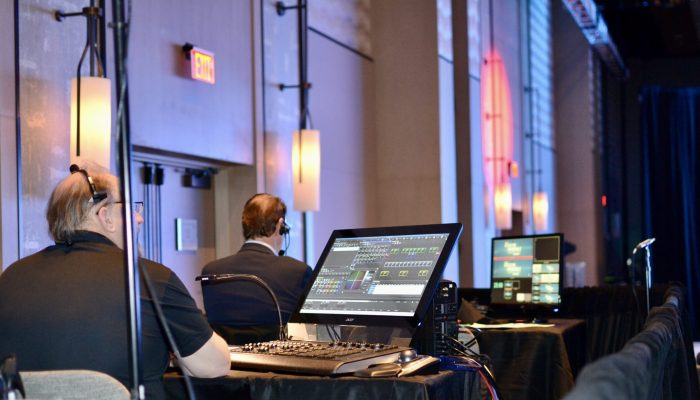
Medical affairs leaders and event production teams planning HCP congresses, scientific meetings, and hybrid healthcare programs need more than technical event execution. Complex life sciences experiences require production partners that can support message clarity, specialized audiences, hybrid participation, learning objectives, and consistent delivery across live and virtual environments.
For pharmaceutical and healthcare organizations, the right production approach begins with understanding the purpose of the program. A congress experience may need to support scientific communication and HCP engagement, while a medical affairs meeting may require a different combination of presentation support, learning design, audience interaction, and hybrid production.
When your most important meeting, launch, summit, or training experience needs to move people, every detail matters. Strategy guides the work. Creativity shapes the story. Precision brings it to life. DEVLINHAIR Production & Learning designs and produces action-driven meetings, live events, and training experiences that move audiences. From our New York City studio, DEVLINHAIR helps organizations bring complex ideas, leadership priorities, and learning moments to life with clarity, purpose, and production precision. Ready to create a hybrid experience your audience can follow, feel, and act on? Let’s talk.
Evaluating Production Partners for Medical Affairs and HCP Congress Programs
Medical affairs events and HCP congress experiences often involve complex information, specialized audiences, multiple stakeholders, and carefully structured communication. Production partners should therefore be evaluated on more than equipment or technical execution alone.
Relevant capabilities may include live event production, hybrid production, broadcast coordination, speaker support, audience engagement, learning design, content flow, and the ability to translate program objectives into a cohesive audience experience.
DEVLINHAIR supports this process by connecting production decisions with the way audiences receive and interact with important information. Its perspective on hybrid event production and audience engagement highlights the importance of designing the in-room and remote experience together rather than treating virtual participation as a secondary layer.
How Enterprise Healthcare Events Require Strategic Production Thinking
Healthcare and pharmaceutical organizations often need events that help audiences understand complex ideas, connect with key messages, and participate in ways that support the purpose of the program. This requires intentional experience design alongside technical production.
Measurement can also help teams understand whether audiences are interacting with the experience in meaningful ways. Event Marketer’s 2026 coverage of event engagement measurement practices discusses using multiple signals to evaluate engagement rather than relying on one metric alone.
For medical affairs and HCP programs, those signals might include session participation, questions, content interaction, follow-up activity, or other behaviors connected to the objectives of the experience. The appropriate measures depend on the audience and purpose of the program rather than a universal definition of engagement.
What Healthcare Organizations Should Compare Across Production Partners
Organizations evaluating production companies should compare documented capabilities against the actual requirements of the medical affairs meeting, HCP congress, training program, or hybrid broadcast. Generic claims about event production provide less useful information than understanding how a partner approaches strategy, production, audiences, and execution.
| Evaluation Area | What to Review | Why It Matters |
|---|---|---|
| Medical and Healthcare Event Experience | Relevant experience supporting complex meetings, congresses, training programs, or healthcare communications | Specialized audiences and complex content require careful production planning |
| Hybrid Production | Broadcast workflows, remote participation, camera and audio production, platform coordination, and audience interaction | Hybrid audiences need an intentional experience rather than simple access to a stream |
| Audience Engagement | Methods for supporting questions, interaction, participation, and content engagement | Engagement should connect to the purpose of the program |
| Learning and Training | Experience connecting production decisions with learning objectives, content delivery, and participant understanding | Many medical affairs programs include educational or training components |
| Production Strategy | How the partner connects objectives, creative direction, content, technical execution, and audience needs | A coordinated strategy helps keep complex programs focused and consistent |
| Production Precision | Processes for technical planning, rehearsals, speaker support, show flow, and live execution | High-stakes programs depend on reliable delivery across multiple production elements |
Hybrid Broadcast Production for HCP Engagement
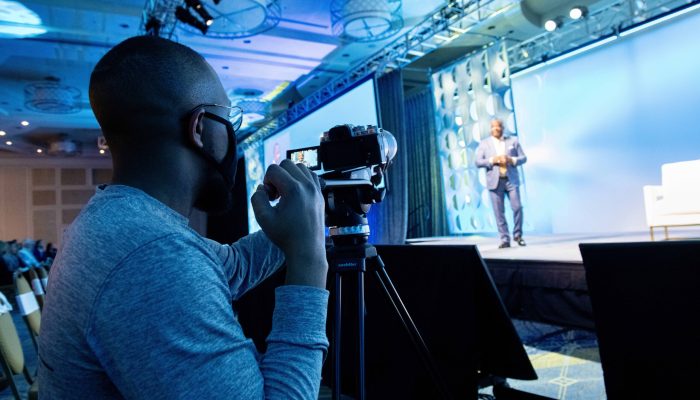
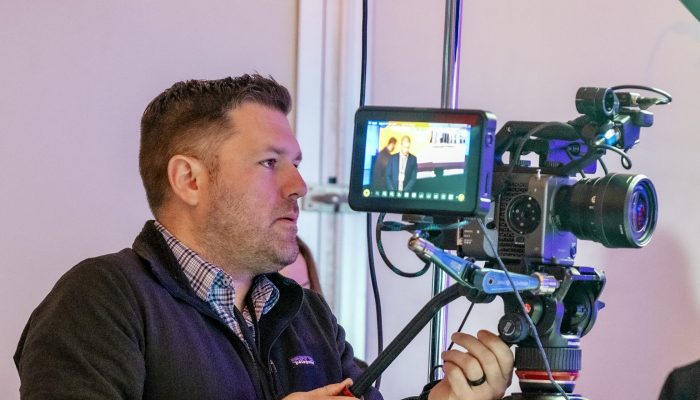
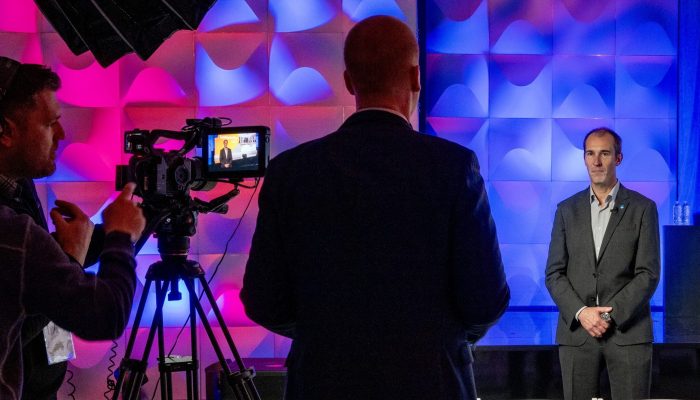
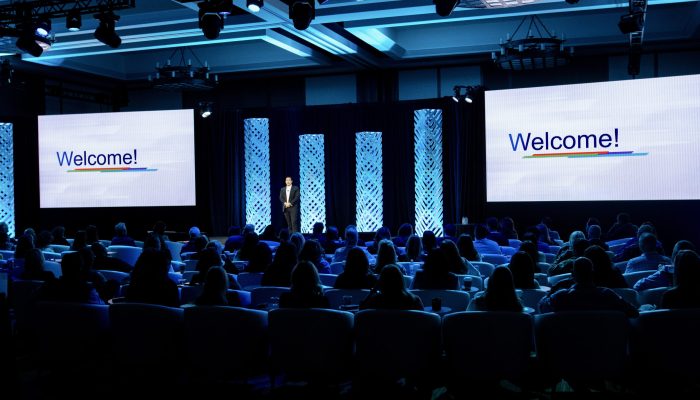
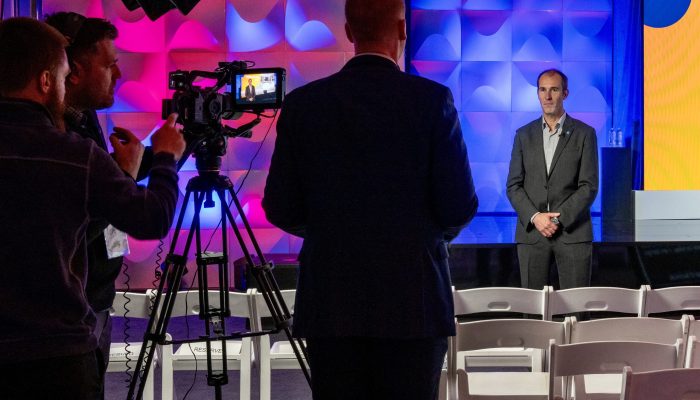
Hybrid broadcast programs require coordination between what happens in the room and what remote participants experience. Cameras, audio, presentation content, speaker positioning, virtual platforms, moderation, and interaction tools all influence whether the program feels connected across formats.
Technology choices can expand the ways remote participants access and engage with content. BizBash’s 2026 coverage of virtual and hybrid event technology options includes tools supporting branded virtual environments, stages, breakout rooms, polling, gamification, and streaming integrations.
The existence of these tools does not mean every program needs every feature. Medical affairs leaders should begin with the communication and audience requirements, then select technology that supports those goals. The production partner’s role is to help determine how technical capabilities fit into the broader experience rather than allowing the platform to define the program.
This is particularly important for HCP audiences who may participate from different locations, devices, and time zones. Clear visual presentation, reliable audio, well-managed transitions, and thoughtfully designed participation opportunities can help remote audiences follow complex information without feeling disconnected from the live program.
Why DEVLINHAIR Supports Complex Experiences
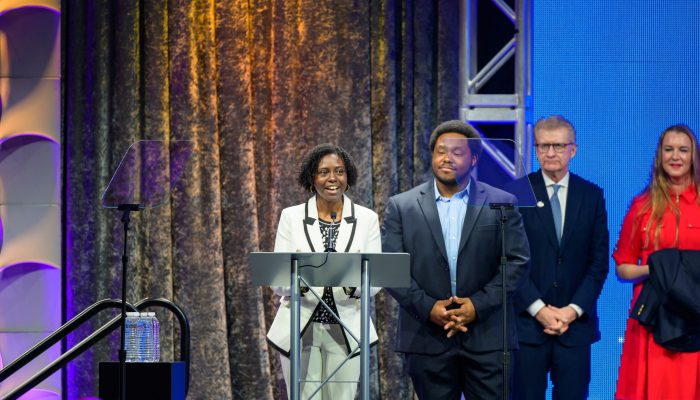
Complex healthcare experiences benefit from production planning that brings strategy, content, creative direction, technical execution, and audience needs together early in the process. For medical affairs programs, that can include coordinating general sessions, scientific presentations, hybrid broadcasts, speaker requirements, training components, and audience participation within one connected production framework.
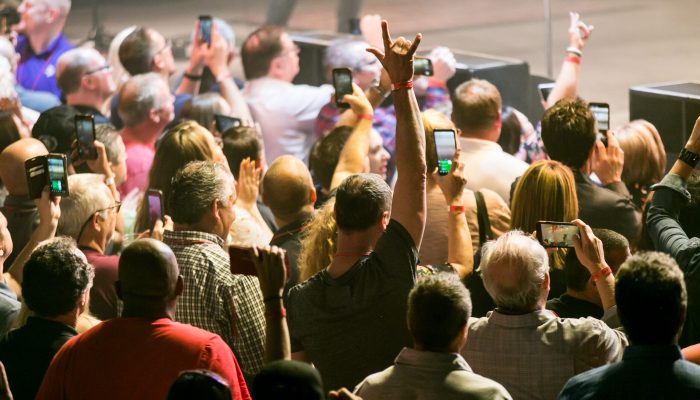
Production choices also influence whether participants can comfortably follow and engage with the experience. DH’s perspective on production choices and audience participation reinforces why staging, content flow, technical systems, and interaction should be considered in relation to the audience rather than as separate production decisions.
Healthcare organizations should ultimately select a production partner based on the requirements of the individual program. Relevant considerations include the complexity of the content, audience structure, hybrid capabilities, learning objectives, production requirements, communication processes, and the level of strategic support needed before and during the experience.
Frequently Asked Questions
What Should Pharmaceutical Companies Evaluate When Selecting an HCP Congress Production Partner?
Pharmaceutical companies should evaluate relevant production experience, strategic involvement, live and hybrid capabilities, speaker support, audience engagement approaches, learning or training experience, and the ability to coordinate complex event requirements. The evaluation should focus on documented capabilities and alignment with the specific goals of the program.
How Do Hybrid Broadcast Capabilities Support Medical Affairs Events?
Hybrid broadcast capabilities help medical affairs teams connect in-person and remote audiences through coordinated camera, audio, content, platform, and participation workflows. Strong hybrid production considers how each audience will receive information and interact with the experience rather than treating remote participation as a simple livestream.
How Should Healthcare Organizations Compare Event Production Providers?
Healthcare organizations should compare providers using criteria connected to the actual program, including strategic approach, relevant event experience, hybrid production capabilities, learning support, audience engagement, technical execution, and production processes. Generic competitor comparisons are less useful than evaluating documented capabilities against specific event requirements.
Disclaimer: The above helpful resources content contains personal opinions and experiences. The information provided is for general knowledge and does not constitute professional advice.
You may also be interested in: Why Production Quality Determines Hybrid Event Success
When your most important meeting, launch, summit, or training experience needs to move people, every detail matters. Strategy guides the work. Creativity shapes the story. Precision brings it to life. DEVLINHAIR Production & Learning designs and produces action-driven meetings, live events, and training experiences that move audiences. From our New York City studio, DEVLINHAIR helps organizations bring complex ideas, leadership priorities, and learning moments to life with clarity, purpose, and production precision. Ready to create a hybrid experience your audience can follow, feel, and act on? Let’s talk.
Powered by flareAI.co