Enterprise training has a practical test: after a leadership program, product training session, or skills development experience, can participants remember the most important information and apply it in their work? Learning and development teams need to design for that outcome from the beginning rather than measuring success only by attendance or content completion.
The challenge becomes more complex when employees participate across virtual, hybrid, and geographically distributed environments. Content structure, pacing, facilitation, production quality, interaction, and reinforcement all influence whether learners stay focused, understand the material, and retain what matters after the program ends.
When your most important meeting, launch, summit, or training experience needs to move people, every detail matters. Strategy guides the work. Creativity shapes the story. Precision brings it to life. DEVLINHAIR Production & Learning designs and produces action-driven meetings, live events, and training experiences that move audiences. From our New York City studio, DEVLINHAIR helps organizations bring complex ideas, leadership priorities, and learning moments to life with clarity, purpose, and production precision. Ready to create a hybrid experience your audience can follow, feel, and act on? Let’s talk.
Designing Enterprise Learning for Attention and Retention
Attention and retention are connected but different learning challenges. First, participants need enough focus to process new information. Then they need opportunities to connect that information with existing knowledge, practice using it, and retrieve it later when the situation calls for it.
This makes content prioritization important. Training programs can lose effectiveness when every message is treated as equally important or when participants are asked to absorb too much information without opportunities to process it. Learning leaders should identify the essential knowledge, decisions, or skills participants need and build the experience around those outcomes.
Current guidance on learning retention strategies for training reinforces the value of active processing, practice, retrieval, relevant examples, and intentional learning design. For enterprise programs, these principles can help teams move beyond one-way information delivery and create conditions that support longer-term recall and application.
Building Virtual and Hybrid Training for Active Participation
Virtual training should not simply reproduce an in-person presentation through a screen. Remote participants are often learning in the same environment where they manage email, messages, meetings, and daily responsibilities, so the experience needs to earn and sustain their attention.
ATD’s guidance on remote learner engagement in virtual training emphasizes creating interest in the learning, enabling participation through virtual classroom tools, and designing experiences that require learners to actively engage. These approaches help connect engagement with learning outcomes rather than adding interaction simply to keep people busy.
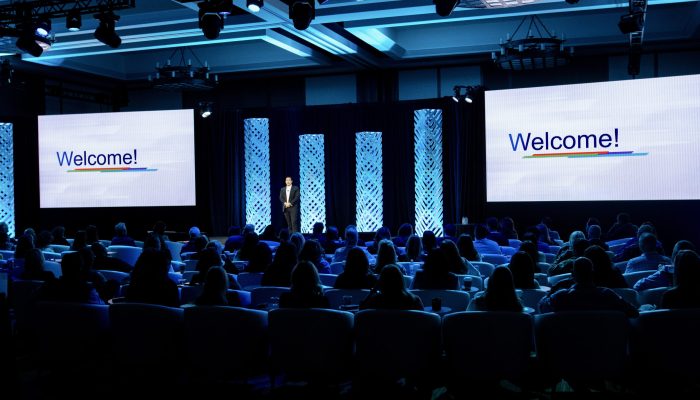
Hybrid training adds another design consideration because remote and in-person participants may encounter the same content in different ways. Learning teams need to decide how each group will hear instructors, view materials, join discussions, complete activities, ask questions, and receive feedback without making one audience feel secondary.
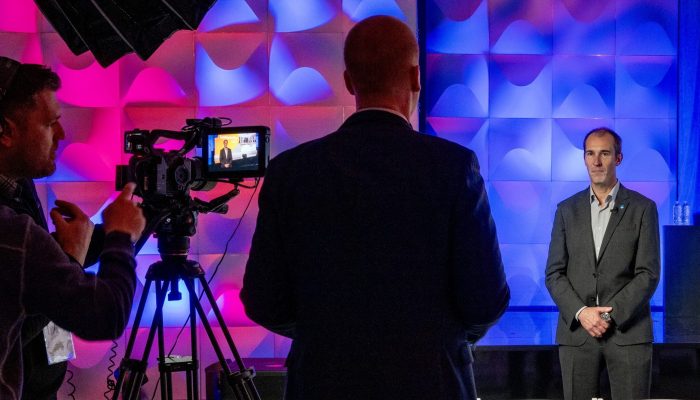
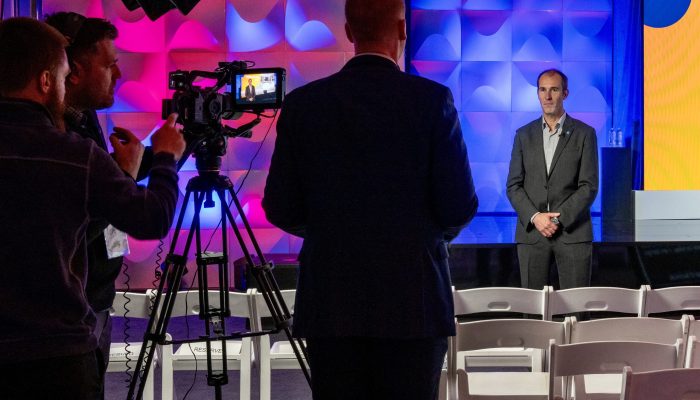
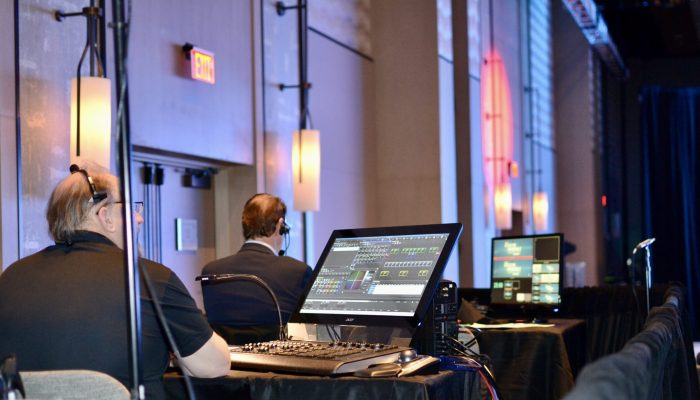
Production decisions can support those objectives when they are made alongside the learning strategy. DH’s perspective on production planning for corporate training experiences considers how pacing, environment, audiovisual elements, interaction, and content structure can work together to support understanding and retention.
Using Learner Behavior to Improve Training Design
Understanding learner behavior does not require biometric monitoring or an undefined concept such as “audience neuroscience.” For learning and development teams, useful behavioral signals are often much more practical and directly connected to the training itself.
Participation in activities, questions asked during instruction, responses to knowledge checks, completion of practice exercises, discussion patterns, learner feedback, and the ability to apply concepts during realistic scenarios can all provide information about how participants are interacting with the program.
These signals should be interpreted in context rather than reduced to a single engagement score. A quiet participant may still be learning effectively, while a highly active participant may not yet understand the material. The purpose of measurement is to identify where learners need more explanation, practice, reinforcement, or opportunities to apply what they have learned.
This approach gives learning teams a clearer basis for improving future programs. If participants consistently struggle with one concept, the content may need restructuring. If virtual learners participate less during a particular activity, the facilitation method may need adjustment. If learners understand a concept during training but cannot apply it afterward, additional practice or reinforcement may be necessary.
Turning Engagement Into Learning Application Across Distributed Teams
Engagement matters because it creates opportunities for learning, but participation alone is not the final outcome. Enterprise learning programs should help employees connect new information to the decisions, skills, and responsibilities they encounter in their work.
Practice is one way to make that connection clearer. Scenario discussions, demonstrations, role-based exercises, collaborative problem-solving, and opportunities to explain concepts can move participants from hearing information to using it. Follow-up materials, manager conversations, reinforcement activities, and continued access to useful resources can then extend learning beyond the original session.
For global organizations, consistency should focus on learning outcomes rather than requiring every audience to experience an identical program. Core messages, expected skills, facilitator guidance, activities, and measures of understanding can remain consistent while delivery is adapted for different roles, regions, languages, or participation formats.
DH also considers audience engagement in corporate learning as part of creating experiences where participants can connect with content rather than remaining passive recipients. Interaction is most useful when it supports a learning objective and gives participants a meaningful reason to think, discuss, practice, or apply what they are learning.
Frequently Asked Questions
How Can Learning and Development Teams Improve Attention During Enterprise Training?
Learning and development teams can improve attention by prioritizing essential content, creating clear learning objectives, varying the pace of the experience, and giving participants purposeful opportunities to discuss, practice, question, and apply information. Production and facilitation choices should support the learning objective rather than compete with it.
How Should Virtual and Hybrid Training Be Designed Differently From In-person Training?
Virtual and hybrid training should account for how remote participants access content, interact with instructors and peers, complete activities, and receive feedback. Rather than transferring an in-person presentation directly online, learning teams should design participation methods, audiovisual elements, pacing, and facilitation specifically for each learning environment.
What Learner Behaviors Can Help Teams Evaluate a Training Experience?
Learning teams can review participation in activities, questions, knowledge checks, practice performance, discussion patterns, learner feedback, and the ability to apply concepts. These signals can help identify where learners need additional clarification, practice, reinforcement, or changes to the learning experience.
Disclaimer: The above helpful resources content contains personal opinions and experiences. The information provided is for general knowledge and does not constitute professional advice.
You may also be interested in: What Organizations Should Consider When Modernizing Training Delivery
When your most important meeting, launch, summit, or training experience needs to move people, every detail matters. Strategy guides the work. Creativity shapes the story. Precision brings it to life. DEVLINHAIR Production & Learning designs and produces action-driven meetings, live events, and training experiences that move audiences. From our New York City studio, DEVLINHAIR helps organizations bring complex ideas, leadership priorities, and learning moments to life with clarity, purpose, and production precision. Ready to create a hybrid experience your audience can follow, feel, and act on? Let’s talk.
Powered by flareAI.co