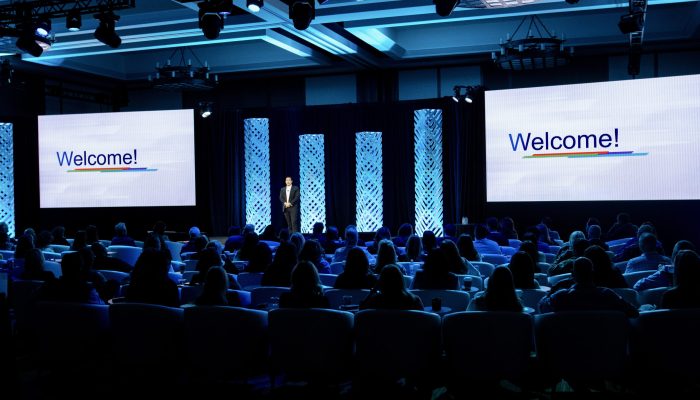
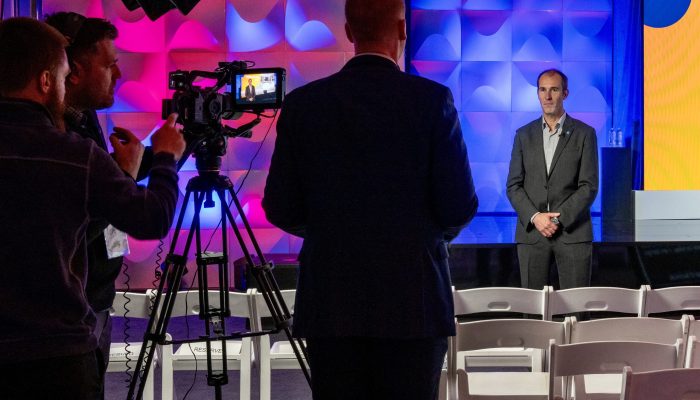
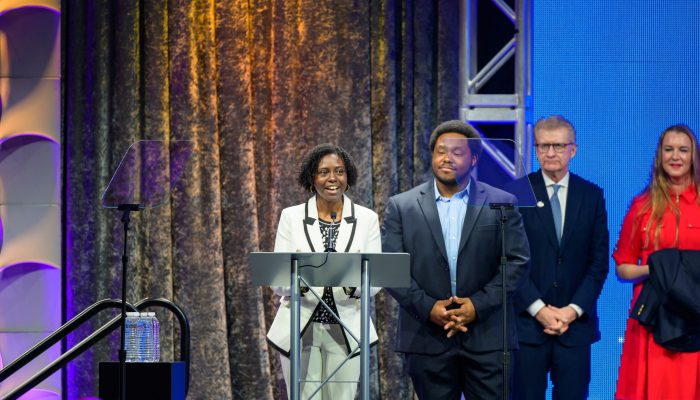
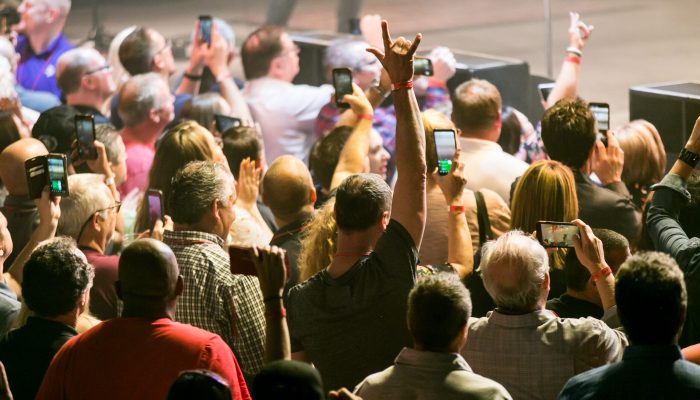
When organizations bring teams together for training programs, leadership development sessions, or strategic alignment initiatives, the core challenge goes far beyond delivering information. The real goal is creating genuine connection helping employees internalize messages, see their relevance to daily work, and feel motivated to apply what they’ve learned. Interactive learning experiences address this challenge by transforming passive sessions into dynamic, participatory environments that drive higher engagement and better outcomes.
When your most important meeting, launch, summit, or training experience needs to move people, every detail matters. Strategy guides the work. Creativity shapes the story. Precision brings it to life. DEVLINHAIR Production & Learning designs and produces action-driven meetings, live events, and training experiences that move audiences. From our New York City studio, DEVLINHAIR helps organizations bring complex ideas, leadership priorities, and learning moments to life with clarity, purpose, and production precision. Ready to create a hybrid experience your audience can follow, feel, and act on? Let’s talk.
The Shortcomings of Traditional Training Approaches
Many corporate training programs still rely heavily on lectures, slide decks, and one-way presentations. While these formats can communicate facts efficiently, they often struggle to hold attention or create lasting impact. Employees frequently report feeling disengaged during such sessions, with information fading quickly once the meeting ends. In today’s distributed work environments, where attention competes with countless digital distractions, traditional methods frequently fall short of fostering the emotional connection and practical application needed for real behavior change.
This gap matters because disengaged learning directly affects organizational performance. When employees don’t fully connect with training content, knowledge retention drops, and the intended alignment around company goals weakens. Leaders responsible for learning and development increasingly recognize that simply covering material is no longer enough experiences must actively involve participants to create meaningful shifts in understanding and commitment.
What Makes Learning Truly Interactive and Experiential
Interactive learning experiences move beyond information delivery by incorporating elements that encourage active participation, emotional investment, and personal relevance. These approaches draw on principles of experiential design, where employees don’t just receive content but engage with it through storytelling, hands-on activities, collaborative problem-solving, and immersive formats. The focus shifts from passive consumption to active co-creation of understanding.
Key characteristics include thoughtful program design that prioritizes attention as a scarce resource. Rather than relying on static presentations, effective experiences incorporate live interaction, real-time feedback, and opportunities for participants to shape discussions. This participatory model helps transform abstract concepts into tangible insights that employees can connect to their specific roles and challenges.
Organizations implementing these methods report stronger emotional connections between employees and organizational objectives. By designing programs that feel purposeful and relevant, training becomes a vehicle for reinforcing culture, improving knowledge transfer, and building deeper alignment with mission and values.
How Interactive Experiences Drive Stronger Employee Engagement
Engagement in learning contexts emerges from multiple layers: behavioral participation, emotional response, and post-experience actions. Interactive formats excel here because they create opportunities for meaningful involvement rather than observation. Employees who actively contribute ideas, navigate scenarios, or collaborate in real time develop a greater sense of ownership over the content and its application.
Employee engagement strategies in modern organizations are increasingly shaped by experiential design principles that prioritize attention, emotional connection, and meaningful participation over passive information delivery. Internal events are no longer treated as one-way communications but as carefully constructed experiences where employees actively engage with content, leadership messaging, and company values. Experiential principles of employee engagement highlight how shifting from one-way communication to thoughtfully constructed experiences helps participants engage more deeply with leadership messaging and company values. This approach turns internal events and training into dynamic environments where employees actively participate rather than simply attend.
The result is improved retention of information and stronger motivation to apply new skills or perspectives. When learning feels memorable and relevant, employees are more likely to carry insights forward into their daily responsibilities, supporting both individual growth and broader organizational goals.
Designing Effective Interactive Learning Programs
Creating high-impact interactive learning requires strategic thinking from the outset. Program designers must consider audience needs, desired outcomes, and the most effective ways to blend content delivery with participatory elements. This includes selecting formats that match the learning objectives whether through facilitated discussions, simulated scenarios, collaborative workshops, or technology-enhanced interactions.
Successful design also accounts for hybrid and distributed participation. Modern training programs often need to deliver consistent, high-quality experiences whether participants join in person, remotely, or through a combination of both. Attention to production details from audio-visual quality to interaction tools helps maintain engagement across different environments and ensures every attendee has equitable access to the experience.
Measuring the Impact of Interactive Learning
Effective measurement of engagement goes beyond basic attendance or completion rates. Organizations benefit from frameworks that capture behavioral signals, emotional responses, intent to apply learning, and actual post-training actions. This holistic view reveals which elements of an experience drive the strongest outcomes and where opportunities exist for refinement.
Modern event strategies emphasize that engagement is not a single metric but a layered combination of behavioral signals, emotional response, intent, and post-event actions that together reveal how participants truly interacted with an experience. In the context of employee learning and internal engagement programs, this means organizations must move beyond simplistic attendance tracking or basic participation counts and instead build more sophisticated measurement frameworks. Measuring engagement at experiential events involves combining multiple data points, including real-time interactions, participation quality, feedback sentiment, and follow-through behaviors. This layered approach provides richer insights than single metrics, helping learning leaders understand how design choices influence both immediate reactions and longer-term results.
Organizations that invest in thoughtful measurement can continuously improve their programs. Data from interactive sessions informs future iterations, allowing teams to strengthen elements that resonate most strongly while addressing areas that need adjustment. Over time, this creates a cycle of increasingly effective learning experiences that better support employee development and business objectives.
Practical Considerations for Implementation
Leaders planning interactive learning initiatives should begin by clearly defining success metrics tied to specific business outcomes whether improved knowledge application, stronger team alignment, or enhanced performance in key areas. This clarity guides design decisions and helps secure necessary resources for high-quality execution.
Technology choices matter significantly. Tools should enhance interaction and accessibility rather than create barriers. Equally important is the human element: skilled facilitators, clear instructions, and thoughtful pacing help participants feel supported throughout the experience. Balancing structure with flexibility allows natural conversations and insights to emerge while maintaining focus on core objectives.
Scalability represents another key consideration. Programs that succeed with smaller groups often need adaptation for larger or more distributed audiences. Production expertise helps ensure that interactive elements remain effective regardless of group size or format, maintaining quality and engagement across different scales.
Building Long-term Value Through Better Learning Experiences
Interactive learning represents more than a tactical improvement in training delivery. When designed and executed well, these experiences become powerful drivers of organizational culture, talent development, and strategic execution. Employees who engage meaningfully with learning opportunities report higher satisfaction and connection to their work, contributing to stronger overall retention and performance.
The most effective programs treat learning as an ongoing journey rather than isolated events. Follow-through mechanisms, reinforcement activities, and opportunities to apply new skills help translate initial engagement into sustained results. Organizations that invest in this comprehensive approach see training deliver greater returns in terms of both employee development and business impact.
As expectations for workplace experiences continue to evolve, interactive learning stands out as a proven way to create memorable, effective development opportunities. By prioritizing participation, relevance, and thoughtful design, companies can strengthen engagement while equipping their people with the insights and motivation needed to drive meaningful progress.
DEVLINHAIR Production & Learning partners with organizations seeking to elevate their internal experiences through strategic, creative, and precisely executed programs. Whether designing leadership summits, training initiatives, or hybrid learning events, the focus remains on creating experiences that truly move audiences and deliver lasting value.
Frequently Asked Questions
What are interactive learning experiences and how do they improve employee engagement?
Interactive learning experiences are training approaches that move beyond lectures by involving employees in discussions, simulations, and hands-on participation. They improve employee engagement by creating emotional connection, active involvement, and real-world relevance to daily work. This approach is often used in corporate training, hybrid events, and internal meetings to strengthen alignment and motivation.
How do interactive learning experiences improve knowledge retention in corporate training?
Interactive learning experiences improve knowledge retention by encouraging employees to actively apply concepts rather than passively receive information. Through scenario-based learning, collaboration, and real-time feedback, participants are more likely to remember and use what they learn in their roles. This leads to stronger performance outcomes in corporate training and employee development programs. It is especially effective in hybrid events and facilitated learning environments where engagement directly supports retention.
How can organizations design and measure effective interactive training programs?
Organizations can design effective interactive training by defining clear learning objectives, incorporating participatory formats, and using tools that support collaboration and engagement. Measuring effectiveness goes beyond attendance and includes behavioral changes, participation quality, and post-training application. These insights help refine future corporate training, meetings, and learning experiences for better impact.
Disclaimer: The above helpful resources content contains general insights and perspectives for informational purposes only. The information provided is for general knowledge and does not constitute professional advice.
You may also be interested in: CNS National Meeting 2024
When your most important meeting, launch, summit, or training experience needs to move people, every detail matters. Strategy guides the work. Creativity shapes the story. Precision brings it to life. DEVLINHAIR Production & Learning designs and produces action-driven meetings, live events, and training experiences that move audiences. From our New York City studio, DEVLINHAIR helps organizations bring complex ideas, leadership priorities, and learning moments to life with clarity, purpose, and production precision. Ready to create a hybrid experience your audience can follow, feel, and act on? Let’s talk.
Powered by flareAI.co