Quick Listen:
When a company delivers corporate training programs, leadership summits, or product launches, the objective rarely ends with simply sharing information. The real test is whether participants leave with lasting knowledge, the ability to apply it, and the motivation to act on it long afterward. Production quality through visuals, staging, technical execution, and audience engagement determines exactly how effectively that learning happens. Without it, even the most well-intended content can fall flat.
When your most important meeting, launch, summit, or training experience needs to move people, every detail matters. Strategy guides the work. Creativity shapes the story. Precision brings it to life. DEVLINHAIR Production & Learning designs and produces action-driven meetings, live events, and training experiences that move audiences. From our New York City studio, DEVLINHAIR helps organizations bring complex ideas, leadership priorities, and learning moments to life with clarity, purpose, and production precision. Ready to create a hybrid experience your audience can follow, feel, and act on? Let’s talk.
Why Engagement Is the Real Metric of Training Success
Leaders in corporate learning and development understand that headcount alone no longer tells the full story of whether a training experience delivered results. Organizations are shifting toward measures that reveal how deeply participants connected with the content, with facilitators, and with one another.
Recent industry data shows that on-site engagement has overtaken other indicators as the top priority for evaluating event success. This recalibration reflects a broader realization: knowledge transfer depends on the learner’s attention state, which in turn is shaped by the production environment itself.
Current event measurement research continues to emphasize engagement as a key indicator of experience quality. Event Marketer’s 2026 EventTrack research identifies on-site engagement as the second most important metric tracked by both B2B and B2C event marketers, behind lead generation. Rather than relying on attendance alone, organizations are increasingly combining behavioral signals, sentiment, intent, and post-event actions to understand how effectively an experience connected with its audience. For corporate training and professional development programs, this reinforces the importance of designing production environments that sustain attention and support meaningful participation throughout the learning experience.
Production Quality as the Foundation for Retention
Training retention suffers when learners disengage early. Production choices such as lighting, audio, visuals, and storytelling directly influence how long participants stay in the flow state. High-quality environments keep the mind present and the message memorable.
Strategic production helps bridge the gap between content and application. It turns abstract concepts into tangible experiences that reinforce key points and make them stick. Without this foundation, even outstanding instructional design can fail to create the long-term change companies expect.
Event production teams that treat quality as a strategic investment, rather than a logistical step, see measurable improvements in how deeply learning lands and how readily participants carry it forward into their daily work.
Storytelling Through Production Elevates Message Alignment
Messages in corporate training and leadership summits are only as effective as the way they are delivered. Production quality allows organizations to craft purposeful storytelling that makes complex ideas accessible and emotionally resonant.
Advanced audiovisual systems, immersive staging, and coordinated lighting create opportunities for participants to experience concepts in new ways. This approach supports stronger message alignment across distributed teams and helps ensure the training purpose drives real behavioral change.
When production design signals that the learning matters, participants respond with greater investment and better outcomes.
Creating Hybrid Capabilities That Support Long-term Learning
Many organizations now run hybrid training programs, combining live and remote participants. Effective hybrid design requires production quality that works equally well for both groups through synchronized content delivery, robust audience engagement tools, and seamless transitions.
Hybrid capabilities matter because they expand reach while maintaining the depth of connection that drives retention. When production is thoughtful, remote learners experience the same level of engagement as those on site, leading to more consistent knowledge application across the organization.
Why Strategy, Creativity, and Precision Matter in Event Production
Effective experience design starts with a clear strategic foundation. Strategy guides the work. Creativity shapes the story. Precision brings it to life. That approach helps organizations design and produce action-driven meetings, live events, and training experiences that move audiences.
Companies that invest in these elements see tangible returns in learner engagement, knowledge retention, and long-term application. Production partners who understand this balance can help training programs achieve outcomes that extend well beyond a single day or session.
Real-world Impact Through Intentional Production
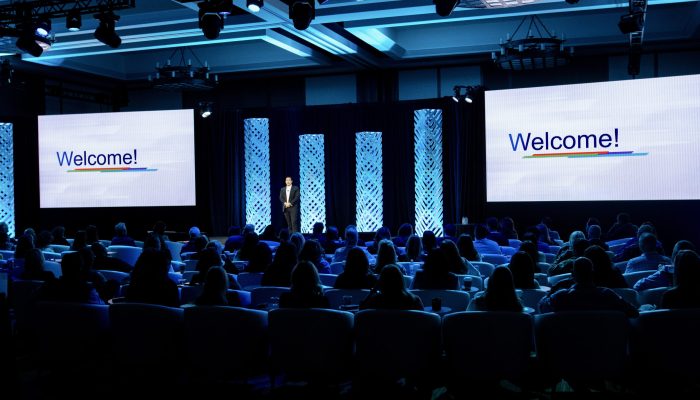
A global Google Cloud technical learning program demonstrates how intentional production can transform training into a more active experience. According to 2025 Google Cloud Tech Immersion, the multi-city program reached more than 6,200 technical go-to-market professionals across London, Los Angeles, and Singapore through deep-dive training, hackathons, interactive demonstrations, and collaborative problem-solving.
The experience was organized around a creative concept called “The Vault,” which positioned attendees as active participants in unlocking knowledge rather than passive recipients of information. The concept extended across layered environments that combined digital storytelling with opportunities for collaboration and exploration.
For organizations designing corporate training and professional development programs, the example illustrates how production choices can reinforce the learning objective itself. When environment, storytelling, interaction, and content delivery work together, complex material can become easier for participants to explore, discuss, and connect to their roles.
Frequently Asked Questions
Why does production quality impact corporate training and learning retention?
Production quality directly impacts corporate training and learning retention by shaping how well participants stay engaged and absorb information. High-quality lighting, audio, visuals, and staging help maintain attention and reduce cognitive distractions during learning experiences. This creates a more immersive environment where key messages are easier to retain and apply in real-world corporate settings.
How does event production improve engagement in hybrid training and corporate meetings?
Event production improves engagement in hybrid training and corporate meetings by creating a seamless and immersive experience for both in-person and remote participants. Through synchronized content delivery, interactive tools, and consistent audiovisual design, all learners stay connected to the same message. This leads to stronger audience engagement and more consistent knowledge application across teams.
What role does storytelling and audiovisual design play in corporate event production?
Storytelling and audiovisual design play a critical role in corporate event production by making complex ideas easier to understand and more memorable. Strategic use of staging, lighting, and multimedia helps translate abstract concepts into engaging, emotionally resonant experiences. This strengthens message alignment and supports long-term behavioral change in corporate training and events.
Disclaimer: The above helpful resources content contains general insights and perspectives for informational purposes only. The information provided is for general knowledge and does not constitute professional advice.
You may also be interested in: Why Event Production Planning Starts Long Before Show Day
When your most important meeting, launch, summit, or training experience needs to move people, every detail matters. Strategy guides the work. Creativity shapes the story. Precision brings it to life. DEVLINHAIR Production & Learning designs and produces action-driven meetings, live events, and training experiences that move audiences. From our New York City studio, DEVLINHAIR helps organizations bring complex ideas, leadership priorities, and learning moments to life with clarity, purpose, and production precision. Ready to create a hybrid experience your audience can follow, feel, and act on? Let’s talk.
Powered by flareAI.co