Quick Listen:
A strong live event does more than hold attention for a few hours. It gives people a reason to participate, connect an important message to their own work, and remember what they experienced after the room has emptied. For corporate learning and development leaders, brand managers, and teams responsible for meetings, launches, and training, that distinction matters. Audience engagement is not simply about keeping people occupied during an event. The more useful question is how the experience can create enough relevance and involvement that people continue thinking, talking, and acting on the message afterward.
Audience engagement at live events becomes more durable when participation is designed around a clear purpose. A leadership meeting may need to align teams around a strategic priority. A product launch may need to make a complex offering easier to understand. A training experience may need to move people from awareness to application. Each objective calls for a different experience design, but the underlying principle is the same: people are more likely to remember and act on information when they have an active role in processing it.
That makes engagement a design challenge rather than an entertainment challenge. A packed agenda can contain valuable information and still leave participants feeling that they were simply moved from one session to the next. The stronger approach is to create a deliberate journey in which content, interaction, pacing, environment, and production all support the outcome.
Recent event-industry reporting illustrates why this shift matters: attendees are increasingly selective about how they spend their time at events, with many skipping sessions in favor of breaks, meaningful conversations, or experiences that feel more relevant to their needs.
When your most important meeting, launch, summit, or training experience needs to move people, every detail matters. Strategy guides the work. Creativity shapes the story. Precision brings it to life. DEVLINHAIR Production & Learning designs and produces action-driven meetings, live events, and training experiences that move audiences. From our New York City studio, DEVLINHAIR helps organizations bring complex ideas, leadership priorities, and learning moments to life with clarity, purpose, and production precision. Ready to create a hybrid experience your audience can follow, feel, and act on? Let’s talk.
Design the Experience Around the Audience Journey
The strongest corporate events begin by asking what participants need to understand, feel, discuss, or do. That audience-first approach changes how the program is built. Instead of starting with a list of presentations, teams can start with the desired outcome and work backward to determine which experiences will help people reach it.
For a sales meeting, that might mean connecting a corporate priority to practical conversations about customer needs. For a training program, it could mean giving participants opportunities to test a concept rather than simply hearing an explanation. For a product launch, the experience might need to make the product story tangible through demonstrations, guided interaction, or carefully sequenced storytelling.
This is where pacing becomes part of the strategy. Long blocks of passive content can make an important message harder to absorb, particularly when several sessions compete for attention. Breaking information into purposeful moments of discussion, application, demonstration, and reflection gives audiences different ways to engage with the same central idea.
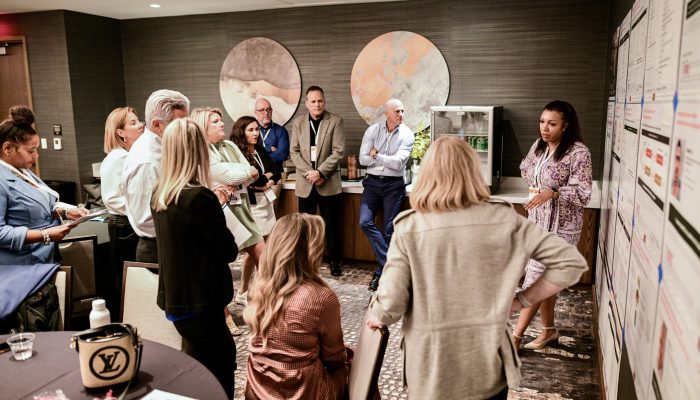
Curated programming can also help participants find relevance within a larger event. Rather than expecting every person to follow an identical path, organizers can create opportunities for smaller discussions, focused learning, peer interaction, and guided exploration. The goal is not to eliminate structure. It is to make the structure serve the audience rather than allowing the agenda to dictate the experience.
Turn Participation Into a Learning Mechanism
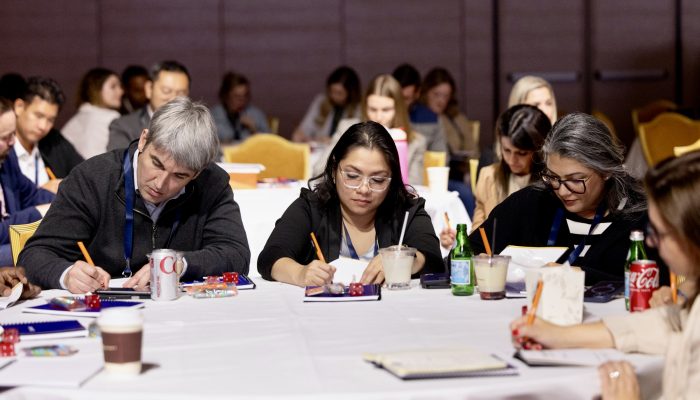
Engagement in live training events depends on more than delivering accurate information. Participants need opportunities to connect information with their responsibilities. That is why interaction should not be treated as an optional activity added after the core content has been developed. It can be one of the mechanisms through which learning happens.
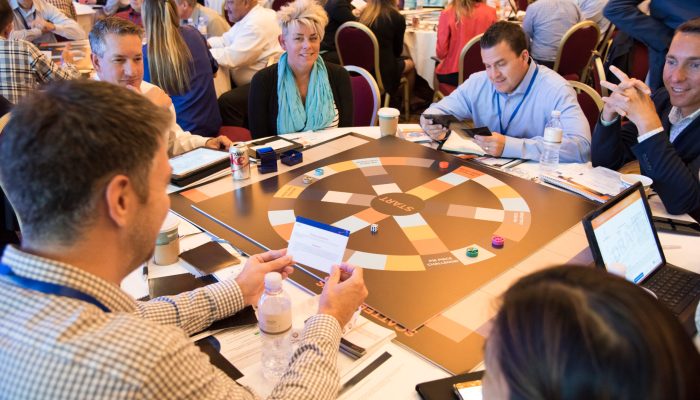
A facilitated discussion can help a team interpret a strategic change. A hands-on exercise can allow participants to practice a new process. A scenario-based session can give people a safe environment to work through decisions they may later face on the job. Even a well-designed audience question can shift a presentation from one-way communication toward active thinking.
The same principle applies beyond formal training. At a leadership summit, participants may need to translate an executive message into priorities for their teams. At a launch, they may need to understand not just what is being introduced but why it matters and how they should communicate it. At a sales meeting, they may need to rehearse a new narrative before they are expected to use it with customers.
These moments make the experience more memorable because the audience is doing something with the message. Lasting engagement grows when participants can see how an idea connects to their decisions, responsibilities, and relationships rather than encountering it as information that belongs only on a stage.
Build Connection Into the Program
Live experiences have an advantage that digital communication cannot always reproduce: they can create conditions for people to connect around a shared purpose. That connection can be especially valuable when teams are distributed, departments operate separately, or employees rarely have opportunities for sustained face-to-face interaction.
Recent reporting on younger professional audiences points to the importance of experiences that create genuine community rather than simply providing another opportunity to exchange business cards. Gen Z and Millennials are redefining event engagement by seeking meaningful in-person connection, including experiences that combine learning, shared interests, and relationship building.
For corporate event teams, the lesson extends beyond demographics. People generally have more reason to stay engaged when they are given meaningful opportunities to contribute to the experience and connect with others. That could take the form of facilitated peer discussions, small-group problem solving, collaborative workshops, or carefully designed networking that gives participants a reason to interact beyond exchanging introductions.
When participants discuss an idea with colleagues, compare experiences, or work through a challenge together, the message becomes part of a shared conversation. That can help carry the experience beyond the venue, particularly when leaders provide a clear next step for applying what was discussed.
Use Production to Reinforce the Message
Production quality matters most when it serves communication. Lighting, staging, video, sound, scenic design, graphics, presenters, transitions, and audience interaction should not compete for attention simply because the technology is available. Each production decision should help the audience understand where to focus and why the moment matters.
This is particularly important when a program contains complex information. A product launch may require a visual story that helps participants understand a new offering. A training experience may benefit from demonstrations and visual cues that reinforce a process. A leadership meeting may need a carefully controlled sequence of executive remarks, supporting content, and participant discussion to keep a strategic narrative coherent.
Hybrid programs add another layer of complexity. After the rapid rise of hybrid events in 2022 and 2023, the strategic question is no longer whether hybrid belongs in the corporate event mix. It is how hybrid capabilities can be designed so that remote participants are treated as part of the audience rather than viewers watching from outside the experience.
That requires alignment between content, interaction, camera direction, broadcast production, facilitation, and the physical environment. A hybrid experience should give remote participants meaningful ways to follow the narrative, contribute to discussions, and access the moments that matter. When those elements are designed together, hybrid production becomes an extension of the experience rather than an add-on.
Production should be part of the communication strategy, rather than a separate technical layer.
Design for What Happens After the Event
The most important measure of an event may not be what happens while participants are in the room. It may be what happens when they return to their teams, customers, or daily responsibilities. Sustaining audience engagement after a live event requires the experience to give people something useful to carry forward.
That begins with a clear connection between the event message and the next action. Participants should understand what they are expected to remember, apply, discuss, or change. Follow-through can then reinforce that message through additional learning, manager conversations, digital resources, internal communications, or opportunities to share progress.
This is particularly important for training. A memorable session can create initial enthusiasm, but behavioral change requires reinforcement and application. The same principle applies to launches and leadership communications: if the event introduces a new direction without helping audiences understand how to act on it, attention can fade quickly.
Event teams can therefore design the post-event experience before the event begins. Identify the key messages. Define the behaviors or decisions they are intended to influence. Determine what participants will need afterward. Then make those elements part of the overall experience rather than treating follow-up as an administrative task.
Make Engagement a Strategic Outcome
Lasting audience engagement is not created by adding more content, technology, or activity to an event. It comes from making deliberate choices about what the audience needs and designing every part of the experience around that need. When participants can understand the message, contribute to it, connect it to their work, and see what happens next, an event becomes more than a moment on the calendar.
For corporate meetings, product launches, leadership summits, and training experiences, that is the opportunity. A well-designed live event can create shared understanding in the room while giving people a reason to continue the conversation afterward. The strongest corporate events do not simply capture attention. They give attention somewhere useful to go.
Frequently Asked Questions
How do live events build lasting audience engagement for corporate meetings and experiences?
Live events build lasting audience engagement by creating interactive moments, emotional connections, and opportunities for audiences to participate rather than simply watch. Strategic event production helps corporate meetings and experiences become more memorable through storytelling, collaboration, and meaningful audience interaction.
Why is audience engagement important for live event production and hybrid events?
Audience engagement is important because it helps organizations create stronger connections with attendees across in-person and virtual formats. Effective live event production and hybrid events use content design, technology, and interactive elements to support learning, communication, and long-term engagement.
How can live events support training experiences and product launches?
Live events support training experiences and product launches by turning information into immersive experiences that help audiences understand and remember key messages. A thoughtful learning strategy combined with professional event production can improve participation, knowledge sharing, and engagement outcomes.
Disclaimer: The above helpful resources content contains general insights and perspectives for informational purposes only. The information provided is for general knowledge and does not constitute professional advice.
You may also be interested in: Audience Interaction Tools Evolve in Live and Virtual Settings
When your most important meeting, launch, summit, or training experience needs to move people, every detail matters. Strategy guides the work. Creativity shapes the story. Precision brings it to life. DEVLINHAIR Production & Learning designs and produces action-driven meetings, live events, and training experiences that move audiences. From our New York City studio, DEVLINHAIR helps organizations bring complex ideas, leadership priorities, and learning moments to life with clarity, purpose, and production precision. Ready to create a hybrid experience your audience can follow, feel, and act on? Let’s talk.
Powered by flareAI.co