Healthcare professionals do not need more information simply placed in front of them. They need clear, credible ways to engage with complex science, treatment pathways, patient needs, and emerging innovations in the limited time available to them. For life sciences organizations, that creates a more meaningful question: how can an experience help professional audiences understand what matters and connect it to patient care?
Immersive experiences can support that goal when they are designed around learning and communication rather than novelty alone. In congress environments, product education programs, healthcare meetings, launches, and hybrid engagements, thoughtfully produced experiences can help healthcare professionals explore complex ideas, participate in informed conversation, and leave with a clearer understanding of the message and its significance.
When your most important meeting, launch, summit, or training experience needs to move people, every detail matters. Strategy guides the work. Creativity shapes the story. Precision brings it to life. DEVLINHAIR Production & Learning designs and produces action-driven meetings, live events, and training experiences that move audiences. From our New York City studio, DEVLINHAIR helps organizations bring complex ideas, leadership priorities, and learning moments to life with clarity, purpose, and production precision. Ready to create a hybrid experience your audience can follow, feel, and act on? Let’s talk.
Immersive Experiences as a Healthcare Communication Strategy
Life sciences communication often involves information that is detailed, specialized, and consequential. Healthcare professionals may be evaluating clinical evidence, exploring a new treatment approach, learning about an innovation, or considering how new information relates to patient needs. An effective experience should make that engagement clearer and more purposeful without reducing the complexity or credibility of the subject.
Immersive design can help by shaping how audiences encounter information. Instead of relying only on long presentations or static materials, an organization may create guided environments that combine visual storytelling, expert discussion, interactive content, patient-centered perspectives, digital exploration, or facilitated learning moments. These elements should not exist for spectacle. They should help professional audiences move through important information with greater focus and context.
The strongest immersive experiences begin with audience need. What does a healthcare professional need to understand? Which questions should the experience help address? Where does interaction deepen learning rather than distract from it? Those decisions should guide the content, environment, technology, speaker preparation, production design, and follow-up resources.
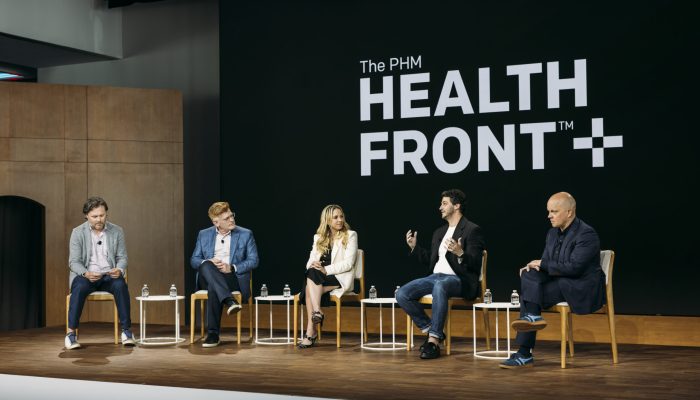
DEVLINHAIR’s work on PHM HealthFront 2025 reflects the importance of creating healthcare marketing experiences centered on audience connection and meaningful engagement. For life sciences organizations, that focus can help professional audiences connect complex messages with a clearer human and practical context.
Turning Scientific Information Into an Engaging Experience
Healthcare professionals encounter significant volumes of clinical and product information across meetings, congresses, professional education, peer conversations, and digital channels. When an organization needs to communicate an important scientific or product story, the experience must compete not by becoming louder, but by becoming more useful and easier to navigate.
An immersive healthcare environment may include interactive scientific content, guided data visualizations, product education stations, expert-led discussion areas, patient journey storytelling, or digital experiences that allow audiences to explore the message according to their interests and responsibilities. These formats can make a complex narrative more approachable while still preserving appropriate scientific rigor and review.
Event Marketer’s 2026 B-to-B Dream Team coverage highlights how leading B2B event professionals are using strategy, storytelling, and in-person engagement to create more meaningful brand experiences. The principle is relevant for healthcare and life sciences marketers because it shows how experiential strategy can make complex offerings easier for professional audiences to understand.
For life sciences firms, the same principle applies across therapeutic education, product communication, medical meeting experiences, and organizational milestones. Immersion has value when it makes the message clearer, creates room for meaningful questions, and helps audiences connect information to a larger purpose.
Designing Engagement for Healthcare Professional Audiences
Healthcare professionals are not a general consumer audience. Their expectations are shaped by evidence, professional responsibility, time pressure, clinical relevance, and the need for accurate information. Experiences designed for them should respect those expectations from the beginning.
This means avoiding interaction for interaction’s sake. A digital installation, demonstration, simulation, facilitated discussion, or visual story should have a defined role in the audience journey. It may help explain a process, provide context around an innovation, encourage a professional conversation, or support a learning objective. When the reason for each element is clear, the experience feels more credible and useful.
Life sciences organizations should also consider the different audiences who may engage with the same message. Healthcare professionals, field teams, leaders, patient advocates, partners, and remote participants may require different levels of information and different formats. A strong experience framework can maintain one coherent narrative while designing appropriate paths for each group.
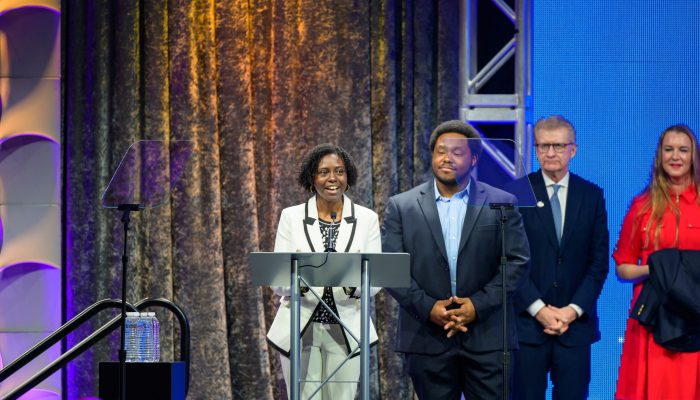
DEVLINHAIR’s Annual Pharma NSM 2024 connected patient stories, multimedia content, general sessions, breakouts, recognition, and audience participation around a unified meeting experience. While the audience context differs from an external healthcare professional engagement, the planning principle is closely related: complex healthcare messages become more meaningful when content, environment, learning, and audience participation support the same purpose.
Patient-centered Storytelling With Credibility and Care
Healthcare experiences are often strengthened when audiences can connect scientific information with the people whose lives may be affected by it. Patient-centered storytelling can help explain why a treatment area, medical innovation, or organizational objective carries significance beyond the data alone.
That storytelling must be approached carefully. Patient perspectives should be incorporated with appropriate consent, review, sensitivity, and a clear communication purpose. A patient story should not be used merely as an emotional device. It should help the audience understand the relevance of the subject while honoring the dignity and accuracy expected in healthcare communication.
Within a live or immersive experience, patient-centered content may take the form of thoughtfully produced video, moderated conversation, environmental storytelling, visual content, or a learning moment connected to a larger clinical or organizational message. When integrated with care, it can help audiences hold scientific understanding and human impact together.
This connection is especially meaningful for healthcare professionals, whose engagement with innovation is ultimately tied to the needs and outcomes of patients. Immersive strategy can create space for that connection when it is built on purpose rather than performance alone.
Live, Hybrid, and Learning-driven Experiences in Life Sciences
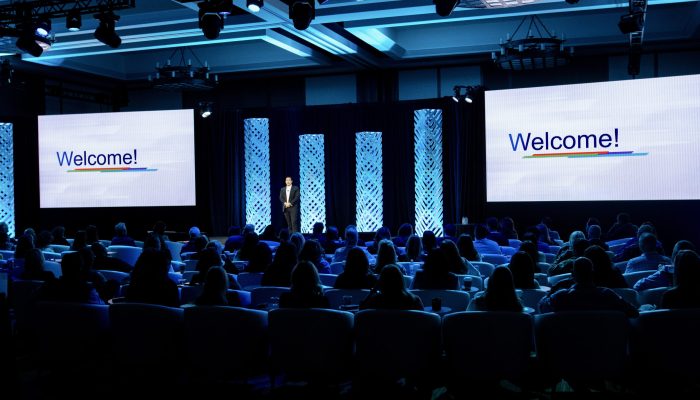
Life sciences organizations engage professional audiences across many settings: medical congresses, product education, advisory programs, facility milestones, clinical or therapeutic learning, leadership meetings, national sales programs, and hybrid events. Each setting has different requirements, but all benefit from a clear connection between message, audience, and experience design.
Live environments can give audiences opportunities for direct conversation, guided interaction, and shared attention. Hybrid capabilities can extend selected experiences to stakeholders who are unable to participate in person. Learning-driven formats can help audiences explore and retain information through purposeful structure, resources, and follow-up rather than a single moment of exposure.
These approaches are often most useful when they work together. A congress experience may introduce an important message that is later reinforced through professional resources. A healthcare milestone may be communicated through a live event and extended through captured content. An internal pharmaceutical meeting may combine storytelling, training, and post-event materials to help teams carry a message forward responsibly.
For life sciences firms, immersive engagement should therefore be considered as part of a larger communication journey. The objective is not simply to create an impressive environment. It is to create an experience that supports understanding in the moment and remains useful after the audience leaves.
Extending Professional Engagement Through Hybrid Capabilities
Hybrid capabilities can increase access to important healthcare content, but only when remote participation is designed with the same intention as the live experience. Healthcare professionals joining digitally should be able to follow the message clearly, access relevant materials, submit questions where appropriate, and understand how the experience relates to their work.
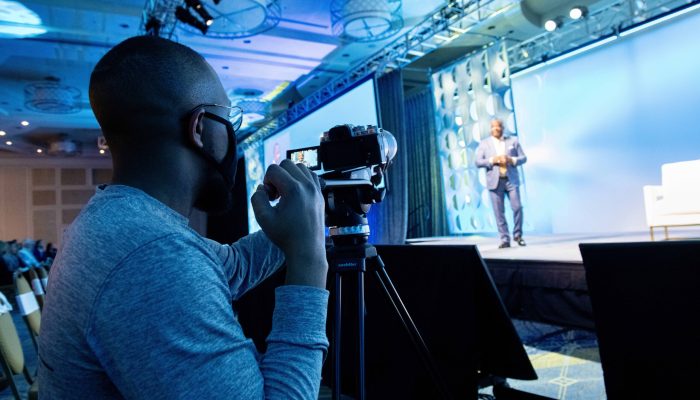
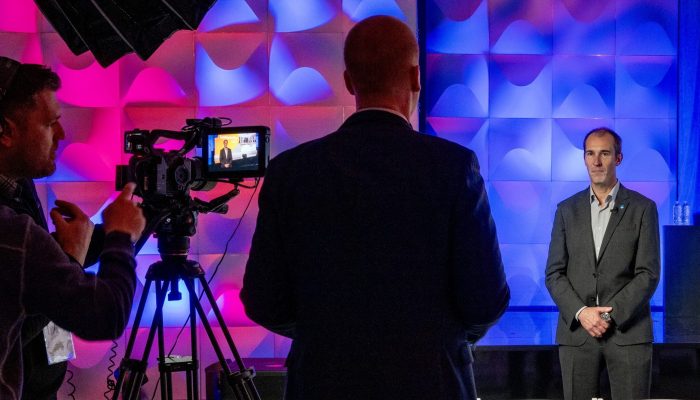
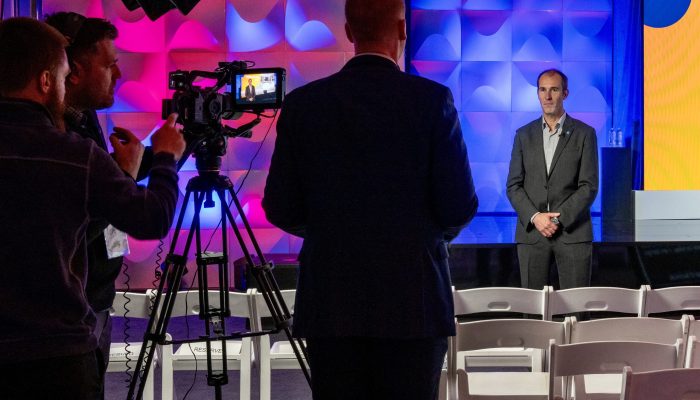
The in-person and remote journeys do not need to be identical. An in-room audience may participate through environmental storytelling, demonstrations, facilitated conversation, and live interaction. A remote audience may benefit from strong camera coverage, carefully structured content, digital resources, moderated discussion, and selected on-demand materials. The goal is for both audiences to connect with the central message in a format designed for their context.
DEVLINHAIR’s Aflac Focus Fest experience illustrates how hybrid design and production can support live and virtual audiences through connected content, selected breakouts, agenda resources, broadcast elements, and extended digital access.
For healthcare and life sciences programs, that planning discipline can support professional education, product understanding, stakeholder engagement, and internal alignment. Hybrid capabilities work best when the audience journey, production design, content structure, accessibility needs, and follow-up plan are established together.
Communicating Healthcare Innovation and Milestones
Some healthcare experiences are designed around a significant moment: a new facility, an innovation milestone, a product development story, an organizational initiative, or a moment of progress connected to patient impact. These moments require precision because audiences need to understand both what has happened and why it matters.
Immersive production can help communicate that significance through purposeful environment design, speaker messaging, visual storytelling, content development, media, staging, sound, lighting, and audience engagement. Each element should support the meaning of the milestone rather than compete with it.
For the Novartis RLT facility opening event, DEVLINHAIR helped create a produced healthcare experience centered on innovation and patient impact. The project shows how an important life sciences story can be translated into a clear and carefully designed event moment for relevant audiences.
For healthcare professionals and other life sciences stakeholders, the value of an immersive experience lies in its ability to connect a complex development with clear meaning. When the production serves the message, an important milestone can become easier to understand, discuss, and remember.
Planning for Review, Accessibility, and Measurement
Immersive healthcare experiences require thoughtful planning beyond creative and technical execution. Scientific content, product messaging, patient perspectives, audience interaction, recorded materials, digital tools, and follow-up resources may all require appropriate medical, legal, regulatory, privacy, accessibility, and brand review.
Addressing those considerations early can improve the experience rather than limit it. Teams can establish which messages must be communicated, which types of interaction are suitable, how content will be used afterward, and what audience support is needed. This gives creative and production teams a clearer framework for designing an experience that is engaging, accurate, and responsible.
Measurement should also be linked to the communication purpose. Attendance and traffic may be useful starting points, but organizations may also examine engagement with content, questions raised, resource usage, learning completion, feedback, follow-up participation, or whether audiences report clearer understanding of the subject presented.
Event Marketer’s reporting on event measurement strategies reflects a broader focus on evaluating how audiences interact with experiences and what those experiences support afterward. For life sciences organizations, that approach can help determine whether immersive engagement contributed to understanding, professional relevance, and meaningful next steps.
What Life Sciences Leaders Should Consider Before Their Next High-stakes Experience
Organizations planning an immersive healthcare professional experience should begin with the message rather than the medium. What does the professional audience need to understand? Why is a live, hybrid, interactive, or immersive format appropriate for that objective? What will help participants connect information with clinical, educational, or organizational relevance?
From there, teams can align content, review processes, audience journey, production design, accessibility, technology, facilitation, and follow-up. Immersive experiences are most effective when they make complex communication feel more coherent and purposeful, not when they simply introduce new tools or visual effects.
For life sciences firms, stronger engagement with healthcare professionals is built through credibility, clarity, and respect for the audience’s responsibilities. When an experience helps professionals engage with important information in a way that is useful, human, and carefully produced, it can create value that lasts beyond the event itself.
Frequently Asked Questions
How can immersive experiences support healthcare professional engagement?
Immersive experiences can support healthcare professional engagement by presenting complex healthcare, scientific, or product information through purposeful live, hybrid, and interactive environments. Guided content, expert conversation, visual explanation, digital exploration, and patient-centered context can help professional audiences engage with a message more clearly and connect it to relevant needs and outcomes.
What types of life sciences programs may benefit from immersive production?
Immersive production can support congress experiences, product education, healthcare milestones, professional learning programs, advisory meetings, internal pharmaceutical meetings, patient-centered storytelling, launches, and hybrid experiences designed for distributed audiences. The right approach depends on the communication objective, professional audience, review requirements, and desired next step.
What should life sciences organizations consider before creating an immersive healthcare experience?
Life sciences organizations should define what the healthcare professional audience needs to understand, determine why an immersive or hybrid format supports that objective, and involve relevant medical, legal, regulatory, privacy, accessibility, and brand stakeholders early. The experience should be designed to strengthen clarity, credibility, and usefulness rather than relying on technology or visual impact alone.
Disclaimer: The above helpful resources content contains general insights and perspectives for informational purposes only. The information provided is for general knowledge and does not constitute professional advice.
You may also be interested in: DEVLINHAIR PHM HealthFront 2025
When your most important meeting, launch, summit, or training experience needs to move people, every detail matters. Strategy guides the work. Creativity shapes the story. Precision brings it to life. DEVLINHAIR Production & Learning designs and produces action-driven meetings, live events, and training experiences that move audiences. From our New York City studio, DEVLINHAIR helps organizations bring complex ideas, leadership priorities, and learning moments to life with clarity, purpose, and production precision. Ready to create a hybrid experience your audience can follow, feel, and act on? Let’s talk.
Powered by flareAI.co